Episode 19
Episode 19: How Clean Books Change the Way You Run Your Business
Episode 19: How Clean Books Change the Way You Run Your Business
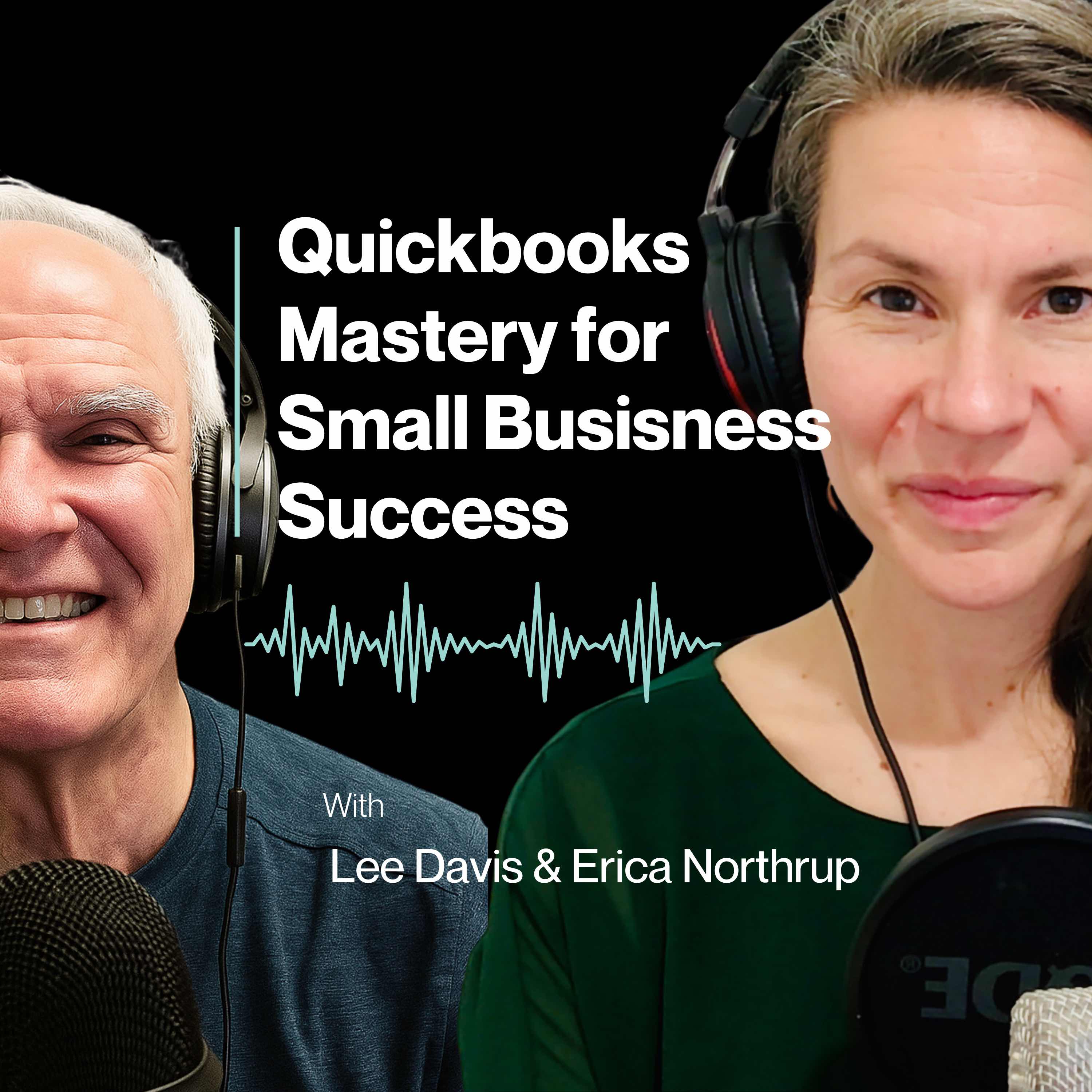
In this episode of QuickBooks Mastery for Small Business Success, father-daughter team Erica Northrup and Lee Davis break down what actually changes once your books are clean.
They explore why clean financials go far beyond bookkeeping, the common mistakes that keep business owners stuck in reactive mode, and the practical shifts that happen when your numbers are finally clear.
This episode connects everything we’ve been building over the last few episodes—and shows you what real clarity actually looks like inside a business.
Key Takeaways
- Clean books eliminate guessing and replace it with confident decision-making
- Pricing improves when you understand true costs and margins
- Hiring becomes strategic instead of reactive
- Tax season becomes predictable instead of stressful
- A clear system—not more effort—is what creates long-term clarity
Questions to Reflect On
- Am I making decisions based on real data or gut feeling?
- Do I actually understand my margins and profitability?
- Would I feel confident showing my numbers to a banker or advisor?
Mentioned in This Episode
Free QuickBooks Clarity Scorecard
Download at: https://lee-davis-and-company.aweb.page/unlock-clarity-free-scorecard
Send Us Your Questions:
support@leedavisandcompany.com
Timestamps
00:00 - Intro
01:00 - What changes when books are clean
02:40 - First improvements businesses see
04:20 - Why clarity eliminates guessing
06:00 - How clean books impact pricing
08:30 - Hiring decisions with real data
12:30 - Tax planning vs tax surprises
16:50 - Stress and uncertainty in business
19:00 - Why systems matter more than effort
23:10 - Closing + Scorecard
Call to Action
If you enjoyed this episode, hit subscribe and stay connected with us at leedavisandcompany.com.
Download our free QuickBooks Clarity Scorecard to see whether your QuickBooks setup is giving you the financial insight you need.
Have a QuickBooks question? Send it to support@leedavisandcompany.com — your question may be featured in a future episode.
Transcript
Welcome to QuickBooks mastery for small Business Success.
Speaker A:I'm Erica Northrup.
Speaker B:And I'm Lee Davis.
Speaker A:I handle the tech and he handles the numbers.
Speaker A:And together as a father daughter team, we bring decades of experience helping small to medium sized businesses thrive.
Speaker B:We know that as a business owner, your time is best spent mastering your craft and growing your business, not getting lost in QuickBooks.
Speaker B:Managing finances can be confusing and you don't have hours to waste sorting through spreadsheets or fixing bookkeeping mistakes.
Speaker B:That's where we come in, helping you streamline QuickBooks so you can focus on building your business.
Speaker A:Each week we break it all down into simple, actionable steps so you can focus on growing your business, not fixing your books.
Speaker B:Let's embark on this journey together.
Speaker A:Welcome back to QuickBooks mastery for small Business Success.
Speaker A:Hi, I'm Erica Northrup, here with my papa, Lee Davis.
Speaker A:And this is episode 19, how clean books change the way you run your business.
Speaker A:Over the last couple of episodes, we've talked about how financial reports can sometimes be misleading if the bookkeeping behind them isn't clean.
Speaker A:We've also talked about the financial numbers every business owner should understand.
Speaker A:And if you didn't listen to those episodes, go back and check them out.
Speaker A:But today I want to talk about something.
Speaker A:We want to talk about something a little different.
Speaker A:What actually changes once these numbers are clear?
Speaker A:So, Papa, I mean, you've spent years helping businesses clean up their books and get their financial systems organized.
Speaker A:Once a business finally has reliable numbers, what actually changes for them?
Speaker A:What makes the difference?
Speaker B:I think they move from a cleanup mode, Erica.
Speaker B:Actually they can go to the next level.
Speaker B:They can start using their reports and their data and they may want to consider using some apps, adding an app.
Speaker B:Many people, once their work is cleaned up, then they can understand, for example, their bank fee.
Speaker B:If their bank fee is cleaned up and they understand the process of using their bank feed, then it becomes easier to look at their numbers and to say, okay, here are some efficiencies or some workflows that I need to improve.
Speaker A:Yeah, absolutely.
Speaker A:So just dialing this in just a little bit.
Speaker A:When a business finally gets their books cleaned up, and what you just mentioned was awesome.
Speaker A:And I feel like we're just at the tip of the iceberg here.
Speaker A:But when they finally get their books cleaned up, what's usually the first change you see happen?
Speaker B:I think the first change is we start looking underneath the numbers and we run a comparative financial.
Speaker A:Yeah.
Speaker B:So that we can identify areas that may be some cost savings.
Speaker A:Absolutely.
Speaker B:Break down some of their profit and loss information, there may be opportunity to talk with their bank, for example, about a refinance and lowering their interest rate on higher interest rate accounts like credit cards.
Speaker B:So really identifying some areas that you can help right away, what I would consider low hanging fruit.
Speaker A:Yeah, absolutely.
Speaker B:To bring right away some revenue, some money into the equation.
Speaker A:Yes.
Speaker A:And I'm sure as you look even deeper, I'm sure those decisions become more intentional.
Speaker A:You know, as they clean things up, there's less second guessing.
Speaker A:I'm sure.
Speaker A:And then the financial conversations, those become easier.
Speaker A:Right?
Speaker B:Of course, yes.
Speaker B:It jumps out at you.
Speaker B:There are opportunities here because the first thing, if you're going to call your banker, he's going to want to see some financial reports.
Speaker B:And if you had a good balance sheet and good profit and loss, your next step might be really having a good budget that you can project and show what might move down the road.
Speaker A:And we've done an episode on that, so go check out the budget episode.
Speaker A:Absolutely.
Speaker A:Yeah.
Speaker A:I'm sure one of the biggest changes is that business owners, they just stop guessing.
Speaker A:Right.
Speaker A:When the numbers are clear.
Speaker A:The decisions you make, you're just more confident about because everything just is cleared up for you.
Speaker A:You can see clearly on the horizon what's coming.
Speaker B:Yeah.
Speaker B:I can tell you, Erica, when you work with a business and it could take years actually for them to finally see, oh, I guess I need to stop spending money.
Speaker B:I've been spending this way because I haven't paid attention.
Speaker B:But all of a sudden they're on the alert because may have been a crisis of cash flow and they don't want to feel that way.
Speaker B:And I think we're going to maybe deal with this a little bit deeper about they want to be in control.
Speaker A:Yeah.
Speaker A:Yep.
Speaker B:And when you give up control of your business, whether you're a bookkeeper, your accountant, your wife, whoever, it takes you out of the picture.
Speaker B:And all of a sudden you've abdicated your responsibility for the numbers and you're the decision maker.
Speaker A:Right.
Speaker B:You can decide.
Speaker B:Right.
Speaker B:So get back in control and say, yes, I understand.
Speaker A:It's so important that the CEO or the decision maker, whoever leading this business actually is leading this business and makes room in their time to be able to cast bigger vision and to be able to see the picture as a greater whole and to understand this is actually what is happening with my business.
Speaker A:And one of the ways you do that is to have a clear understanding of where the numbers are and where things are going and where things have come from.
Speaker A:And all of that.
Speaker A:That's so important.
Speaker A:Yeah, I love that.
Speaker A:So how does that show up in something like pricing?
Speaker A:Specifically?
Speaker B:Of course, when you look at your pricing, especially in this market, the costs I have just escalated.
Speaker B:So you have to make sure that you are understanding what the labor market is costing you.
Speaker B:Therefore, if your records are cleaned up, you can run a good payroll report.
Speaker A:Yes.
Speaker B:You could go out and see what's the market for, let's say a person who handles carpentry.
Speaker B:What's an apprentice making?
Speaker B:What am I paying?
Speaker B:What has to be the rate I charge for overhead.
Speaker B:So when you're looking at your labor and materials, you must make sure that you've got good data.
Speaker A:Right.
Speaker B:And that you explain to the customer, because you may have given them an estimate and that estimate could have been six months ago.
Speaker B:And when they decide they want to now approve that estimate, you have to say, I'm sorry, but prices have gone up 10%.
Speaker B:We will need to adjust that estimate.
Speaker B:So having good, strong pricing and having a good understanding of your ability to communicate that to the customer, then you'll be successful in getting the pricing correct.
Speaker B:And the customer will understand.
Speaker B:And believe me, if they've decided now they don't want to go forward, you'd rather have that than lose money on the job, right?
Speaker A:Absolutely.
Speaker A:And I guess that goes back to really having a pulse on where things are at, not just in your business, but in the industry as a whole.
Speaker A:And what are the costs of things, the current costs of things.
Speaker A:When you have that data, you're able to make decisions and you're able to forecast things and you're able to make estimates that are actually correct and that are actually going to be profitable for you.
Speaker A:Opposed to now, you just lost X amount of money.
Speaker A:You know, I'm sure sometimes businesses raise prices because they finally see their margins clearly.
Speaker A:Other times I'm sure they realize certain products or services aren't as profitable as they thought.
Speaker A:So it's just, again, it's just coming back to having a pulse on the business and what's going on and what's going on in your industry as a whole.
Speaker A:Okay, that was really good insight.
Speaker A:So, so what about hiring?
Speaker A:Because I feel like that feels like a big decision for most business owners.
Speaker B:Yeah, it's a huge decision.
Speaker B:And the owner has to be able to know when it's appropriate to make the hire.
Speaker B:But the right hire, not finding somebody that maybe a friend who's looking for a job, that may not be the best way to hire, might need to look at your workflow and say, I need somebody who has XYZ skills.
Speaker B:I don't want to train them, I need that.
Speaker B:But in order for me to get that individual, I have to pay appropriately.
Speaker B:So understanding what you can afford for payroll, because you may have to wait because that may be a task that you as the owner need to look at your schedule and say, I could do this work because I have this skill set and I could hire a lower level, maybe employee to handle this particular skill set.
Speaker B:So looking at payroll and having a budget for payroll, I think is critical.
Speaker A:Yeah, absolutely.
Speaker A:And I feel like this goes back to really being proactive in your business and planning ahead versus just reacting to what's happening.
Speaker A:So if you're forecasting as a CEO, you're the visionary for your business business and you have a plan, you have that 10 year plan, you know where you want to go and you know that it's probably going to take you more hands to get you where you need to be.
Speaker A:So it's forecasting ahead, understanding, okay, if I want to get here, I'm going to need X amount of hands in order to get that accomplished.
Speaker A:Okay, let's budget for X amount of hands.
Speaker A:Let's plan that out.
Speaker A:Let's not just simply be in crisis mode and say, okay, we're drowning, we can't do it anymore.
Speaker A:We need more people now.
Speaker A:Opposed to, okay, I know six months we're going to be doing X amount of dollars in order to get to X amount of dollars.
Speaker A:We need more help in order to do that.
Speaker A:So let's start thinking about, let's start planning for those changes that are going to come down the pike.
Speaker B:I hate to say it, but it's pretty basic.
Speaker B:Go back to the business plan.
Speaker B:Yeah, you had a business plan, a one year, year, five year.
Speaker B:Don't leave that business plan on the shelf.
Speaker B:Have it available and update it.
Speaker B:Because planning ahead versus reacting.
Speaker B:I do not like to work with clients who say to me, I don't know where the money is.
Speaker B:Okay, believe me, I like to get beyond that.
Speaker B:And they need to get beyond that because that's like a blindsided.
Speaker B:I've been blindsided.
Speaker B:Instead of really understanding that, yes, here's a cycle for my business and I understand where we are and where we need to go.
Speaker A:We're not going to be reactive CEOs, we're going to be proactive CEOs.
Speaker A:We're going to run these businesses like the bosses that we are and we're going to take control and be in charge of what we've been blessed with because at the end of the day, that is what it's all about.
Speaker A:We have been blessed with more because we have stewarded it well.
Speaker A:Absolutely.
Speaker A:I'm sure that hiring becomes a very strategic decision instead of a risky guess.
Speaker A:When the numbers are clear.
Speaker A:Right.
Speaker A:It all comes back to those numbers.
Speaker A:When you understand your numbers, it all clears up for you.
Speaker B:You're making better decisions.
Speaker A:Right.
Speaker B:You spend less time trying to figure out what went wrong and more time on what we can do.
Speaker B:We've already figured out what we did wrong.
Speaker B:Don't rehash it.
Speaker B:We're going to move forward and we're going to make these decisions.
Speaker B:Right.
Speaker A:We're just going to deal with it and take it head on.
Speaker A:Like you should do any challenge, anything that comes along the way, if you try to go around it, if you try to go under it, if you try to go over it, it never works out.
Speaker A:Going through it and dealing with it is not only going to deal with the challenge right then and right there, but you're also going to grow as a business owner.
Speaker A:You're going to grow as an individual, as a person.
Speaker A:You're going to become better because of whatever challenge you're facing.
Speaker A:Love that.
Speaker A:Okay, so now we're all in the middle of taxes.
Speaker A:We have to get all our taxes stuff done for April.
Speaker A:We have that date that is coming fast and approaching.
Speaker A:But how does this impact something like your taxes?
Speaker A: changes am I going to make in: Speaker B: amount of taxes based on your: Speaker B: ought a piece of equipment in: Speaker A:Right.
Speaker B:You might have been able to use the extended depreciation that would have saved you significantly in your taxes.
Speaker B:So tax planning can't be done after the year is over.
Speaker B:Tax planning needs to occur between January and December of the previous year.
Speaker A:Yeah.
Speaker B:Okay.
Speaker B:And.
Speaker B:And you should take advantage of your accountant to say, here's what my business looks like.
Speaker B:I recommend that people at least meet with their accountants and their lawyers once a year, if nothing else, to review the year and see what challenges they're facing and get their input.
Speaker B:Because if you have a good accountant, they know your business and they know other Businesses like you so they can give you some advice.
Speaker A:Nothing is new under the sun.
Speaker B:No.
Speaker B:And it might be this idea of, should I move from an LLC C to a subchapter S Corp.
Speaker B:Some of these questions I hear all the time, and they're both legal and accounting.
Speaker B:Be organized.
Speaker B:And don't think you're too busy to work with your accountants and your lawyers.
Speaker B:For sure.
Speaker A:It just all comes back to just not having any kind of surprise at the end of the year when your taxes are due that, okay, you know, this is what I'm going to owe.
Speaker A:When your books are organized throughout the year, taxes become something you plan for, not something that catches you off guard.
Speaker A:And that's the whole idea, listeners.
Speaker A:You don't want to be caught off guard at all.
Speaker A:And this is why we're talking about these things.
Speaker B:Yeah.
Speaker B:And Eric, I can tell you that people will give.
Speaker B:Non accountants, non lawyers are never shy about giving advice.
Speaker B:And I'm always amazed when people get advice from other entrepreneurs about how they should run their business.
Speaker B:And I say, do they know your business?
Speaker B:Do they understand what's behind the curtain?
Speaker B:And they don't, of course.
Speaker B:I said take their advice with a grain of salt and move on.
Speaker B:But advice of your professionals who you rely on to provide your tax planning and your legal advice.
Speaker A:Right, Right.
Speaker A:Because they might have some really good nuggets and some really good things.
Speaker A:Entrepreneurship is very similar across the board.
Speaker A:Like, you deal with a lot of the same issues, but of course, there are nuances when it comes from different types of industry and different types of businesses.
Speaker A:So I think.
Speaker A:Absolutely.
Speaker A:Talk to the professionals.
Speaker A:And I do believe in the coming weeks, in the coming months, we're going to have some of these professionals on to give you guys a better idea of what those nuances look like, how you can specifically grow your business in a way that benefits your business and benefits your industry as a whole.
Speaker B:Well, Erica, I haven't met any small business who said they didn't want to save money.
Speaker B:Yeah.
Speaker B:Okay.
Speaker B:So if you can work with your professionals, understand where there might be some cost savings when you get your taxes done, if the accountant has to spend a lot more time, you're going to spend a lot more money.
Speaker B:Who doesn't want to save money today?
Speaker A:Absolutely.
Speaker B:If you work well with your cpa, understand their deadlines, then you may not have to file an extension.
Speaker B:But if you do, it's not the end of the world.
Speaker A:Yeah, absolutely.
Speaker B:That, yes.
Speaker B:Your tax season goes on after April 15th.
Speaker A:It does.
Speaker B:Just the way it goes One thing.
Speaker A:I feel like we hear from business owners a lot is just the stress around not knowing where things stand financially for them.
Speaker A:Does that change once the numbers become clear?
Speaker A:Papa.
Speaker B:It's not just about the numbers.
Speaker B:The numbers help.
Speaker B:Okay.
Speaker B:But it is intuitively understanding and taking time with the numbers.
Speaker B:Okay.
Speaker B:Not just.
Speaker B:I have some clients who prefer to avoid the numbers, and they want me to take care of them.
Speaker B:And I keep telling them that, you know what?
Speaker B:I can understand your numbers, but what about.
Speaker A:Right, Right.
Speaker B:What about your business and what you need?
Speaker B:Because I can't climb into your head.
Speaker A:Right.
Speaker B:And know what's going on behind.
Speaker B:I can guess when you ask me questions and you're getting to something which just spit it out.
Speaker B:Something on your mind that you are concerned about.
Speaker B:And maybe you didn't sleep well.
Speaker A:Yeah.
Speaker B:And you want to get rid of stress because maybe you have other commitments that I'm not aware of.
Speaker A:Yeah.
Speaker B:Or maybe you think you should have made this particular decision, but you didn't.
Speaker B:And so believe that while the numbers can help you, you have to be in a mindset that you're going to understand them and the decision path that you can make.
Speaker A:Yes, absolutely.
Speaker A:I'm sure when a business owner understands those numbers and understands those pathways, the business feels much more manageable.
Speaker A:It removes a lot of that uncertainty for them.
Speaker B:Oh, I see it.
Speaker B:I see.
Speaker B:When they move, okay.
Speaker B:From reactive to having more confidence and less stress.
Speaker A:Yeah.
Speaker B:And they look for ways to manage their stress.
Speaker A:Yes.
Speaker A:And I think that is so important because you started a business not to necessarily bring more stress in your life.
Speaker A:Everything brings stress, but there is an acceptable amount of stress, and then there's going over the top.
Speaker A:That just puts you into being paralyzed, and you don't want that at all.
Speaker A:Awesome.
Speaker A:Okay.
Speaker A:So everything you're describing, better decisions, less stress, more clarity.
Speaker A:It sounds like that doesn't just happen randomly.
Speaker A:Is there usually a process or a system behind getting to that point?
Speaker A:Papa.
Speaker B:Oh, yes.
Speaker B:First of all, if you identify your key targets, what are the key targets that you'd like to focus on this month, next month, and not get too many.
Speaker B:Just get where you think the greatest opportunity is.
Speaker B:There may be an app, if you think about a contractor who'd like to be able to get their invoicing done at the time they deliver the service.
Speaker B:Therefore, there are a lot of elements that go into that they might want, like a scheduling app that they can have their employees clock in, charge the job, know what materials they bought, purchased, the customer is going to pay for.
Speaker B:Understand the current price, make sure they've reviewed the opportunity there and have things priced correctly.
Speaker B:And they can generate the invoice and they can get payment at the time, no billing.
Speaker B:They get their invoice paid and they're on to the next job.
Speaker B:They clock in.
Speaker B:So there's a way that it gets managed.
Speaker B:And that really takes a lot of stress out of the fact that when the employee, at the end of the day, they don't want to keep track, let the owner know on all the jobs and what the time was and the materials and all of it.
Speaker B:No.
Speaker B:This is one example of what you could look at.
Speaker B:And I'm going to look at that process for a couple of our clients.
Speaker B:We're going to try and break it down to make it easy.
Speaker B:Because employees, they're overwhelmed, too.
Speaker B:So you can't throw a lot at them.
Speaker B:You start off small, right?
Speaker B:You look at what you can accomplish and lots of benefits to that particular type of app that you wouldn't have to necessarily spend a lot of money on it.
Speaker B:But if you do, you look at the cost benefit.
Speaker B:I'm not always opposed to spending money.
Speaker B:I just don't want to spend it unnecessarily for the client.
Speaker A:You want to spend it in the right way.
Speaker B:That's correct.
Speaker B:Yeah.
Speaker A:I feel like it's not when it's just something we thrown at a wall, but it's not accidental when it's purposeful.
Speaker A:It comes from structure and consistency.
Speaker A:And what I feel most businesses are missing is that system.
Speaker A:I feel like that's what you've been talking about is really honing in and having a system that works for the business owner to help them give them this clearer picture and be able to make the decisions that they need to make in a more concise and better manner.
Speaker B:Lots of times people can explain and tell you, you should have this system, okay?
Speaker B:And.
Speaker B:But what they neglect to tell you is they have one other person or two other people that manage that system, right?
Speaker B:When if you're a solo entrepreneur, you've just got yourself, right?
Speaker B:And you've got to figure out how you stretch yourself out.
Speaker B:And you might have somebody like me who could come in with my team and maybe set something up.
Speaker B:But you've still got to understand how it works, right?
Speaker B:And how you're going to benefit because you understand your business and the processes and your customers and lots of things that, you know what?
Speaker B:I don't know.
Speaker B:Then you can make a decision to add this app and start out and not get overwhelmed and fail at it.
Speaker A:Absolutely.
Speaker A:I feel like what we see over and over again is that it's not about working harder in QuickBooks, it's about having a clear system for how everything is set up and maintained.
Speaker B:Yeah, you can't necessarily work harder in QuickBooks.
Speaker B:Okay.
Speaker B:Because they're going to go back to the same point, the same place.
Speaker A:Right.
Speaker B:And now you're going to be frustrated and angry because you've just wasted time.
Speaker B:And time is money.
Speaker A:Yeah, no one wants to waste time.
Speaker A:So really clean books aren't just about bookkeeping.
Speaker A:They're about having the information you need to actually run your business.
Speaker A:Love that.
Speaker A:Okay, you guys, if you're listening and thinking, I'd love to have that kind of clarity in my business, the first step is really understanding Whether your current QuickBooks setup is giving you reliable financial information.
Speaker A:That is exactly why we created the QuickBooks Clarity Scorecard.
Speaker A:It's a simple way to quickly evaluate whether your books are organized in a way that actually supports good decision making.
Speaker A:You can find the QuickBooks Clarity Scorecard in our show notes and on our website at leedavis and company.com and in our next episode, we're going to be talking about something that I think a lot of business owners feel but don't always say out loud, why QuickBooks can feel so confusing even when you're doing your best to keep things organized.
Speaker A:So stay tuned.
Speaker A:We'll see you next week.
Speaker A:Have a wonderful rest of your week.
Speaker A:Bye for now.
Speaker A:Thanks for tuning in to QuickBooks mastery for small Business Success.
Speaker B:If you enjoyed this episode, hit subscribe and stay connected with us at leedavis.
Speaker A:And company.com we know QuickBooks can be overwhelming, so we've put together together a free resource to help you get started right away.
Speaker A:Grab your copy at leedavis and company.com and when you do, you'll also get access to our VIP email list where we share exclusive QuickBooks tips, business strategies.
Speaker B:And support, and we'd love to hear from you.
Speaker B:If you have a QuickBooks question or a business challenge, send it our way@supporteadavisoncompany.com we might feature it in a future episode.
Speaker A:We're here to help you simplify QuickBooks and grow your business one step at a time.
Speaker A:See you next time.