Episode 28
Episode 28: How QuickBooks Turns Everyday Transactions Into Financial Reports — Part 2
Episode Title
Episode 28: How QuickBooks Turns Everyday Transactions Into Financial Reports — Part 2
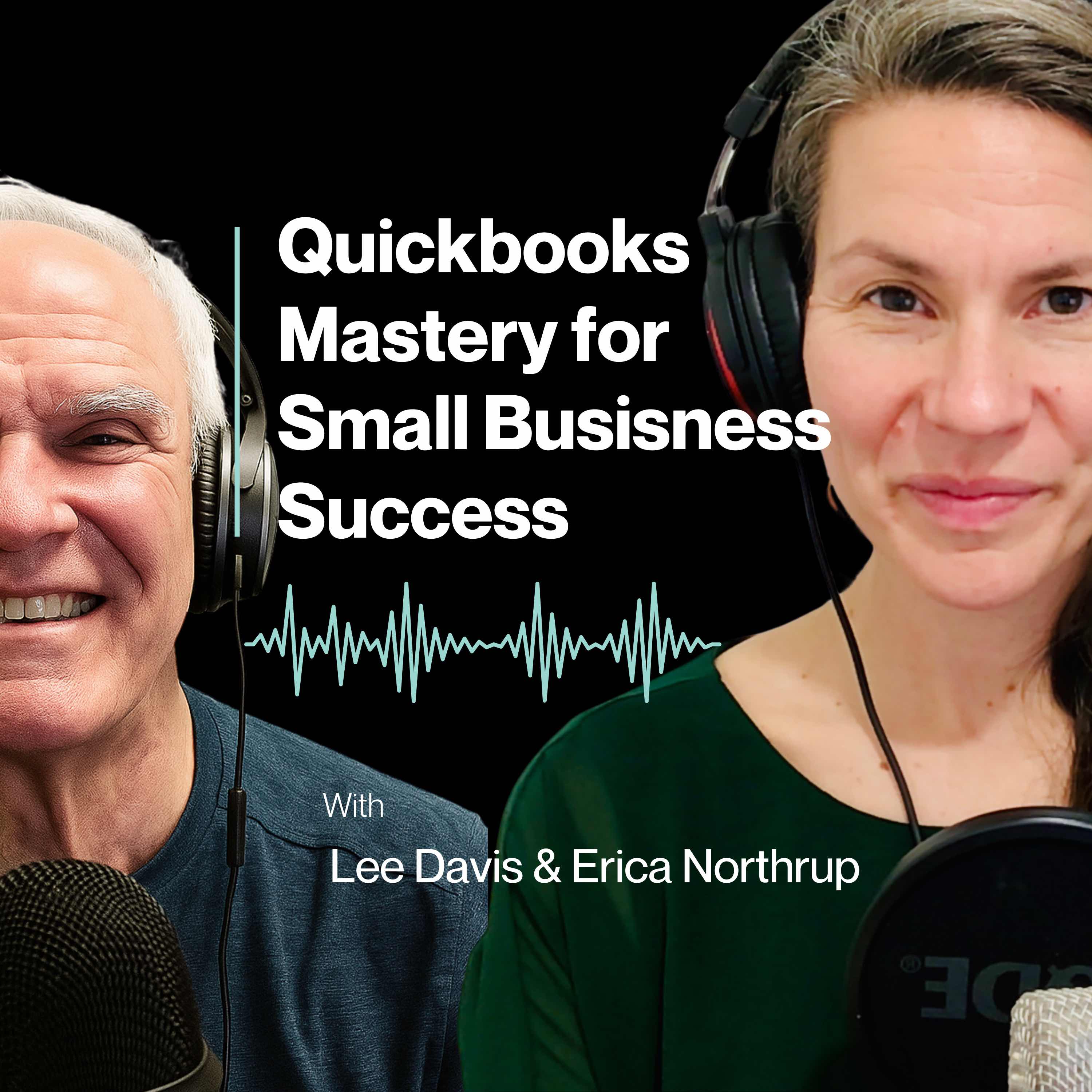
In this episode of QuickBooks Mastery for Small Business Success, father-daughter team Erica Northrup and Lee Davis continue their conversation on how everyday QuickBooks transactions become the financial reports business owners rely on.
Part 1 focused on QuickBooks forms like invoices, sales receipts, bills, checks, and expenses. In Part 2, Erica and Lee move deeper into what happens after the right form is chosen.
They explain why categories matter, how the Chart of Accounts organizes your numbers, what flows to the Profit & Loss, what belongs on the Balance Sheet, and why the bank feed should never replace proper bookkeeping judgment.
This conversation is especially important for business owners who open their Profit & Loss or Balance Sheet and wonder, “Is this actually right?”
Because good reports do not happen just because transactions were entered into QuickBooks. Good reports come from using QuickBooks correctly.
Key Takeaways
- A correct dollar amount in the wrong category can still create a wrong financial report.
- Categories connect transactions to the Chart of Accounts and determine where they show up on the Profit & Loss or Balance Sheet.
- Loan payments, owner draws, equipment purchases, credit card payments, and transfers need to be recorded carefully.
- The Profit & Loss shows business performance over a period of time, while the Balance Sheet shows what the business owns, owes, and has built at a specific point in time.
- Bank feeds are helpful, but they do not always know whether a transaction should be matched, split, excluded, or categorized differently.
- Reconciliation, Accounts Receivable, Accounts Payable, uncategorized transactions, and unusual entries are great places to start checking whether your reports are accurate.
Questions to Reflect On
- Are your QuickBooks transactions being categorized correctly, or are you relying too much on the bank feed?
- Do your bank and credit card balances in QuickBooks match your statements?
- Have you reviewed your Profit & Loss and Balance Sheet together, or are you only looking at one report?
- Do you have uncategorized income, uncategorized expenses, old unpaid invoices, or old unpaid bills that need to be reviewed?
- Are your reports giving you the information you need to make decisions about hiring, equipment, taxes, debt, and paying yourself?
Mentioned in This Episode
Free QuickBooks Clarity Scorecard
Download at: https://lee-davis-and-company.aweb.page/unlock-clarity-free-scorecard
Send Us Your Questions
support@leedavisandcompany.com
Timestamps
00:56 – Continuing the conversation from Part 1
02:34 – How categories connect to the Chart of Accounts
09:34 – Why Cost of Goods Sold matters on the Profit & Loss
15:52 – What shows up on the Balance Sheet
30:06 – Why the bank feed helps but can also create problems
34:24 – Simple places to check if your reports are accurate
40:49 – How good reports lead to better business decisions
Call to Action
If you enjoyed this episode, hit subscribe and stay connected with us at leedavisandcompany.com.
Download our free QuickBooks Clarity Scorecard to see whether your QuickBooks setup is giving you the financial insight you need.
Have a QuickBooks question? Send it to support@leedavisandcompany.com — your question may be featured in a future episode.
Transcript
Welcome to QuickBooks mastery for small Business Success.
Speaker A:I'm Erica Northrup.
Speaker B:And I'm Lee Davis.
Speaker A:I handle the tech and he handles the numbers.
Speaker A:And together as a father daughter team, we bring decades of experience helping small to medium sized businesses thrive.
Speaker C:We know that as a business owner,.
Speaker B:Your time is best spent mastering your craft and growing your business, not getting lost in QuickBooks.
Speaker B:Managing finances can be confusing and you don't have hours to waste sorting through spreadsheets or fixing bookkeeping.
Speaker B:That's where we come in, helping you streamline QuickBooks so you can focus on building your business.
Speaker A:Each week we break it all down into simple, actionable steps so you can focus on growing your business, not fixing your books.
Speaker B:Let's embark on this journey together.
Speaker A:Welcome back to QuickBooks mastery for small Business Success, where we help business owners understand QuickBooks in a simple, practical way so they can trust their numbers and make better decisions.
Speaker A:I'm Erica Northrup here with my papa, Lee Davis.
Speaker A:And this is episode 28, How QuickBooks Turns Everyday Transactions into Financial Reports, part 2.
Speaker A:In last week's episode, we talked about why every transaction matters.
Speaker A:How QuickBooks uses forms like invoices, sales, receipts, bills, checks and expenses, and why choosing the right form is so important.
Speaker A:Today we're continuing that conversation by looking at what happens after the form is chosen.
Speaker A:Because in QuickBooks, it is not enough for the dollar amount to be correct.
Speaker A:The transaction also has to be categorized correctly.
Speaker A:It has to flow to the right place, it has to be matched correctly.
Speaker A:And over time, all of those everyday choices are what build your profit and loss, your balance sheet sheet and the reports you rely on to understand your business.
Speaker A:So today we're going to talk about categories, the chart of accounts, the profit and loss, the balance sheet, bank feeds, and some simple ways business owners can start checking whether their reports are actually being billed correctly.
Speaker A:And the goal is not for you to become an overnight accountant.
Speaker A:Remember that.
Speaker A:The goal is to help you understand enough about what QuickBooks is doing behind the scenes so you can recognize when something does not look right, ask better questions and make better business decisions.
Speaker A:Papa, in the last episode we talked about choosing the right form.
Speaker A:Once that form is chosen, the next piece is the category or account.
Speaker A:So let's start there.
Speaker A:How do categories affect what shows up on the profit and loss or the balance sheet?
Speaker C:Well, Erica, I think we in one previous podcast and I apologize the fact that I don't remember all the podcasts.
Speaker A:Hey, that's okay.
Speaker A:I mean we're at episode 28.
Speaker A:I mean that's a milestone.
Speaker A:Right.
Speaker A:In itself.
Speaker C:We talked about the chart of accounts as being foundational, that when the chart of accounts is set up, there are some standard accounts that will come over.
Speaker C:And it's a little confusing in the language, if you will, terminology of the fact that categories are this made up word that QuickBooks uses now for the online version to know that a category is really in the chart of accounts.
Speaker C:So that you're going to set up categories in a number of ways.
Speaker C:But the way I think we're talking about right now is the fact that you will use a category to tell QuickBooks where the transaction is going to rest in the chart of accounts.
Speaker C:So if we go back to one of our early pieces of advice and that was use the IRS Schedule C to, you know, set up your accounts, because accounts and categories, they're synonymous, a little confusing.
Speaker C:They are the resting place, if you will, in the chart of accounts of where that transaction will get posted.
Speaker A:Oh, absolutely.
Speaker A:That makes a whole lot of sense.
Speaker C:When you're talking about a category.
Speaker C:You can start off with the basics, you know, and then you can add, as you may have, some industry specific accounts that you want to set up.
Speaker C:But basically, if you're like 95% of our clients, you're going to use QuickBooks to file your taxes.
Speaker A:Right.
Speaker C:And you want to make it as easy as possible for your accountant to be able to upload your QuickBooks file, which if your accountant is listed on your QuickBooks and he has or she has immediate access, you'll be able to upload your information into their accounting software.
Speaker C:Having said all that, it's important that you understand the transaction.
Speaker C:You know, I think we can use the example of the range hood.
Speaker C:You worked on that while you understood where the range hood would go, you needed specific parts or pieces, right?
Speaker D:Yeah, yeah, absolutely.
Speaker C:Just like we understand that the chart of accounts is a program in QuickBooks and you can go to the chart of accounts and you can add accounts and you can delete accounts or you can merge accounts.
Speaker C:Sometimes I find when people are setting up their chart of accounts, they have duplicate accounts.
Speaker C:But today we're going to stay focused on categories and choosing the right category starts.
Speaker C:Understanding about what you're buying or what you're selling.
Speaker D:Yes.
Speaker C:Okay.
Speaker C:Just ask yourself, you know, what is it that you are either selling or buying?
Speaker C:And then you might have to ask yourself in figuring out, okay, I'm going to narrow it down.
Speaker C:And then.
Speaker C:And one more question.
Speaker C:Is it related to cost of goods sold?
Speaker D:Hmm.
Speaker C:So picking the right category is Going to help you make better sense of your end product, your profit and loss, and your balance sheet.
Speaker A:Mm.
Speaker A:Got you.
Speaker A:So what are the specific types of categories that, for instance, show up on the profit and loss?
Speaker C:So they start with the income.
Speaker C:While your income is certainly an account, it's also a category.
Speaker C:And if you look at both the desktop version, it's considered an account in QuickBooks Online, they have moved it to refer to as product and services and categories.
Speaker C:So it becomes important to know that if you're talking about income, then you're going to choose the right income category to say, well, you know what, where is it going to reside in the profit and loss?
Speaker C:Is it going to reside in sales?
Speaker C:Are you going to just create a category called sales, or do you want more specific?
Speaker C:It really depends on the end user, on what they would like to see.
Speaker C:When I was working with a client and they had multiple businesses, happened to be an engineering firm, but they also had rental income.
Speaker C:And so he wanted to see his rather than his sales.
Speaker C:He wanted to record as rental income.
Speaker A:Mm.
Speaker C:And so we went back and we had to kind of re.
Speaker C:Engineer, if you will.
Speaker C:Yeah.
Speaker C:The chart of accounts.
Speaker C:And then we had to go in and make some journal entries out of sales, put them in rental income.
Speaker C:Because QuickBooks is funny.
Speaker C:You can't go back and you can't just make the correction and try and get it to update.
Speaker C:So there are certain features that you will do that on and others that will not.
Speaker C:So just understanding how QuickBooks work, sometimes you have to say, okay, we did this, but we really want this.
Speaker C:Like he did sales, he really wanted rental income.
Speaker D:Ah, got you.
Speaker C:Okay.
Speaker C:And so we were able to get him what he wanted because he's the boss, right?
Speaker A:Absolutely.
Speaker C:And he wanted a number of things cleaned up in his financial reports, but all the way back to the very question that sometimes we don't ask is, what actually happened?
Speaker C:One of our grandchildren loved mysteries.
Speaker C:And as I've been listening, as she listens to these mysteries, I think to myself, there's a quickbook story here.
Speaker C:Okay.
Speaker C:Because sometimes when I'm working with clients, a little bit like a mystery.
Speaker C:Yeah.
Speaker A:You're a detective.
Speaker C:You peel back the onion, you start getting the whole story.
Speaker A:Papa, you're a detective.
Speaker A:You have to go in there with the clues that you have to figure out what happened.
Speaker D:Yeah, yeah.
Speaker C:And I think sometimes it was three bookkeepers ago, you know, And.
Speaker C:And I have to say, okay, we just need to figure out kind of clues and then put the pieces together.
Speaker A:Yeah.
Speaker C:And get the owner what he would like now?
Speaker D:Yeah, absolutely.
Speaker D:I love that.
Speaker A:That's so good.
Speaker A:Okay, so to kind of bring it back.
Speaker A:So income, the income kind of categories that shows up clearly on the income section of the profit and loss.
Speaker C:Yeah.
Speaker A:And so what's then another category that shows up on the profit and loss?
Speaker C:Well, I would would tell you that certainly cost of goods sold shows up on the profit and loss.
Speaker C:When you go in to set up that account in QuickBooks, you don't set it up as cost of goods sold.
Speaker C:Generally you set it up as maybe job materials.
Speaker C:That's a direct cost, whatever is a direct cost for you to produce your product.
Speaker A:So that would be your expenses.
Speaker C:Yes.
Speaker C:You want that in the cost of goods sold.
Speaker A:Got you.
Speaker C:And.
Speaker C:And so choosing that category when you are entering the transaction gets it to where you want it on the profit and loss.
Speaker C:And I see this as oftentimes sometimes a big mistake that people make that they haven't stopped to think about what goes into cost of goods sold.
Speaker C:And that's a very important.
Speaker C:I think we talked about the importance of cost of goods sold.
Speaker A:Oh, yeah.
Speaker C:It's a standard measurement that you want to be able to differentiate from your normal business expenses.
Speaker A:Right.
Speaker A:It's the cost basically of the product, what it takes to make that product.
Speaker C:That's correct, yeah.
Speaker A:So having a clear breakdown, then, you know how much you're going to charge for that particular product when you understand those basics.
Speaker C:Yeah.
Speaker C:And for our landscaping listeners, you know, I think oftentimes you say, well, you know, what goes into that product?
Speaker C:Well, that sale.
Speaker C:That person out there mowing the lawn.
Speaker A:No, exactly.
Speaker D:Yes.
Speaker A:Goes in wages.
Speaker D:Yeah.
Speaker C:You couldn't sell the lawn mowing services if you didn't have a person doing it and be gas to, you know, to run the lawnmower.
Speaker A:It's just thinking about that there's a lot even into a service, there's a lot that goes into producing that product.
Speaker A:And a service is a product.
Speaker A:Right.
Speaker A:It's an end result of something that someone has bought.
Speaker A:So even that in the service industry, there's a cost of doing business.
Speaker A:There's a cost of the product that you're producing.
Speaker A:Absolutely.
Speaker C:In today's world, the landscaper or the people in service, the cost of fuel, as we all know, has skyrocketed.
Speaker D:Yeah, absolutely.
Speaker C:And the customer has to unfortunately experience that cost.
Speaker A:Yes.
Speaker C:Because the margin in some products and services is minimal.
Speaker A:You can't go into the red necessarily.
Speaker C:Think that you can absorb some of that cost and go on and you Know, be profitable.
Speaker D:Yeah.
Speaker A:I remember I was working at a small local coffee shop, and I can remember one of the big gas hikes, and they had to raise a lot of their prices in order to accommodate for that big hike in gas.
Speaker A:All those little things go into the product that you produce.
Speaker D:Absolutely.
Speaker A:When you think about a landscaping company.
Speaker D:Absolutely.
Speaker A:That's a big factor.
Speaker A:That's a big thing you need to consider.
Speaker C:I guess when you look at the service industry as a whole, they're being hard now because the delivery costs, like on pump.
Speaker C:We take care of several pump companies.
Speaker D:Yeah.
Speaker C:And the pumps are so expensive that when you're setting up that product in QuickBooks, you've got to know what that product costs you.
Speaker D:Mm.
Speaker C:Because that product gets hooked to a category.
Speaker C:Okay.
Speaker C:So categories.
Speaker C:You know, when you get right down to it, when you boil it all down, you need to know that managing your small business is even more challenging these days if you're not tracking your products that you're selling.
Speaker C:Of course you use categorization in that.
Speaker D:Yeah.
Speaker C:It kind of hooks to your account.
Speaker C:So it becomes a challenging puzzle to say you want to make sure that if you are paying for a product that you are selling and they're going up at a rate that's not sustainable without a rate hike increase in that product that your client knows.
Speaker D:Yeah.
Speaker C:That you have to pass that cost along.
Speaker D:Yeah.
Speaker A:And I think at the end of the day, and this is a good reminder for all of our business owners, it's transparency.
Speaker A:Right.
Speaker A:No one is blind to what is happening.
Speaker A:Right.
Speaker A:No one's blind to the fact that gas prices have gone up.
Speaker A:So I think it's having that complete transparency with your clients and saying, this is why we're having to raise our prices.
Speaker A:And it's communication.
Speaker A:Right.
Speaker A:At the end of the day, I think the clients still have problems that they need solved, and you business owners have those solutions to those problems.
Speaker A:And so people are going to pay what they're going to need to pay, get their problem solved.
Speaker A:It's just about communicating effectively and just being transparent with what's happening inside of your business.
Speaker A:I think that's a really good call out, Papa.
Speaker D:That's great.
Speaker C:And, you know, one of the things I like about several of our clients, I have great relationships with them.
Speaker C:You know, they say, listen, if my customer doesn't want to pay the increased cost, then while I've been thankful for them.
Speaker C:Yeah, you know what?
Speaker C:I can't keep them as a client.
Speaker D:No.
Speaker D:Yeah, absolutely.
Speaker C:Because it's important for me to Stay in business.
Speaker A:Yeah.
Speaker C:And if I've taken care of this particular client for 10 years, and because I have to increase my prices, they go somewhere else.
Speaker C:Well, I guess that tells me about that client.
Speaker C:So that customer.
Speaker C:So anyway, I think it's all.
Speaker C:It's tied together as you kind of talk about in communication.
Speaker D:Yeah, absolutely.
Speaker A:And I think a good reminder is by you, you know, laying your boundaries and what you're willing to do for your business by saying no to a particular type of client, you're making room for the kind of client you do want.
Speaker A:So if you're keeping your margin really low and you never are honest with that client, and that client doesn't accept a new price and they go somewhere else, which is fine, then you have space in your schedule and your time and what you can actually accommodate for someone else, that will be a yes for that price.
Speaker A:And then at the end of the day, you're gonna do better.
Speaker C:Well, it does come around to categorization because that's what we're talking about, right?
Speaker D:Ye.
Speaker D:Yeah, absolutely.
Speaker C:Understanding what you're paying kind of all wraps into knowing how you categorize it, how you manage that cost.
Speaker D:Yeah.
Speaker C:So that it's profitable for your business.
Speaker D:Yeah, absolutely.
Speaker D:Okay.
Speaker A:So what about the balance sheet?
Speaker A:What accounts show up on the balance sheet?
Speaker C:The balance sheet is assets, liabilities, and equity accounts.
Speaker C:They show on the balance sheet when you're going to use accounts.
Speaker C:Oftentimes they're more structural.
Speaker C:Okay.
Speaker C:As opposed to a fluid expense or income, they're more structural because cash doesn't necessarily change in value.
Speaker C:What you have in your bank account.
Speaker A:Right.
Speaker C:Can hold on to that.
Speaker C:That's a real number.
Speaker A:Yeah.
Speaker C:And you just need to get it categorized correctly and.
Speaker C:And understanding, again, knowing what happens in a transaction.
Speaker D:Yeah, absolutely.
Speaker C:You use the right form, then QuickBooks has made one side of the entry for you, and you just need to get other side of the entry on the balance sheet, if you will.
Speaker C:If we're talking about the balance sheet, and oftentimes I find the General Journal is extremely helpful for you to understand about when you might use that to record a transaction.
Speaker C:So let me give you an example.
Speaker C:A client has a mistake that they've made in their cash account, it's affected sales, it affected a number of issues that would reside in the bank fee, and they didn't know what to do.
Speaker C:So I'd say, you know how we talk about Superman, Batman, Spider Man.
Speaker D:Yeah.
Speaker C:Superman to the rescue.
Speaker C:The General Journal.
Speaker A:Yeah.
Speaker C:Becomes the Superman to fix that problem.
Speaker A:Yeah.
Speaker C:And you need to decide what account you're going to use, how you're going to categorize it.
Speaker C:Lots of times I tell myself, self, you know, one side of the transaction, why don't you breeze through the rest of the charter accounts and see where you want to make the other side?
Speaker D:Yeah, absolutely.
Speaker C:And then make sure you've made some notes on the transaction.
Speaker D:Yeah.
Speaker C:So that you know when six months from now, when you look at that transaction.
Speaker C:Oh, what did I do that for?
Speaker C:Notes are very helpful.
Speaker D:Yeah, super helpful.
Speaker A:So true.
Speaker A:Okay, so if a transaction is categorized incorrectly, what happens, Papa?
Speaker A:What happens in general with the reports?
Speaker C:Well, what happens is chances are your balance sheet will not reflect what happened.
Speaker A:Okay.
Speaker C:And you have to go back and make a correction.
Speaker A:Right.
Speaker C:Because it may show up in the bank reconciliation.
Speaker C:And that's oftentimes.
Speaker C:We've talked about that.
Speaker C:Where sometimes things show up.
Speaker C:But it will show up.
Speaker A:It will show up.
Speaker C:Running your balance sheet, you say, oh, that's a negative balance.
Speaker C:That doesn't belong there.
Speaker A:Right, right.
Speaker C:So you'll have to correct it.
Speaker D:Right.
Speaker A:So the report will be wrong even if the amount is right?
Speaker A:If you don't have it categorized correctly.
Speaker A:Yeah, yeah.
Speaker A:Crazy.
Speaker D:I love that.
Speaker A:Okay, so let's look at some more real world examples.
Speaker A:So talk about loan payments.
Speaker A:What happens with loan payments when we think about categorization?
Speaker C:So a loan payment, usually you have one side of the transaction which is a cash withdrawal for the payment.
Speaker A:Right.
Speaker C:But the other side of it, which is the same amount down into principal and interest, it costs you money.
Speaker A:Right.
Speaker C:To borrow money.
Speaker C:It all just doesn't get recorded as a principal payment.
Speaker C:Yeah, must pay principal and interest.
Speaker C:And I find sometimes in these times that I don't know whether it's because some of the finance companies, the banks, they don't necessarily always apply the principal and interest breakdown.
Speaker C:So it's important when I tell clients, it's important for you to understand if you're able to get that breakdown.
Speaker C:Sometimes it's on their website, you know, or sometimes they'll send you a bill in the mail and the next bill reflects the previous principal and interest.
Speaker C:Sometimes you have to be a bit creative, right.
Speaker A:In figuring that number out.
Speaker C:Get that information.
Speaker A:Yeah.
Speaker C:But point is, you must get it.
Speaker A:Because if you don't have that, it's going to reflect wrong in your.
Speaker A:On your reports.
Speaker C:I think it's my example that we shared back in a previous podcast.
Speaker C:Somebody never took the interest on some loans going back.
Speaker C:It was significant loans.
Speaker C:They lost a lot of money.
Speaker C:Because if you're always putting it toward the principal.
Speaker C:That's not a deductible expense expense.
Speaker C:Principal shows up on the balance sheet.
Speaker D:Right.
Speaker C:And you now lost a significant tax deduction.
Speaker A:Right.
Speaker A:Where the interest will show up on the profit and loss.
Speaker C:That's correct, yeah.
Speaker C:Understanding the whole payment can't go toward expense.
Speaker C:Okay.
Speaker D:Yep.
Speaker C:And the whole amount can go to principal.
Speaker A:Right.
Speaker C:Okay.
Speaker C:On the balance sheet.
Speaker C:So it does have consequences for federal income tax calculations.
Speaker A:Okay, so let's talk about owner draws.
Speaker C:Well, the owner draw, it's an equity account, all right.
Speaker C:And it really depends how your business is set up.
Speaker C:If you are an llc, a single member llc, then you're going to use an owner draw.
Speaker C:And a lot of companies are single member LLCs.
Speaker C:And so it's not a business expense expense.
Speaker C:It is a equity account and it's just treated like that money.
Speaker C:It gets applied to your drawer account.
Speaker A:Yeah.
Speaker C:And when you file your taxes, you're going to show an income, whatever income you have on your profit loss, and some adjustments will go directly to you.
Speaker C:You pay taxes on that income.
Speaker C:The way you manage those taxes is that you receive an owner draw, like in advance.
Speaker A:Got you.
Speaker C:You're getting money.
Speaker C:You better set aside some of that money to pay your taxes.
Speaker D:Right, Absolutely.
Speaker C:I see people who don't.
Speaker D:Yeah.
Speaker C:And they say, well, where's my W2?
Speaker C:And say, you don't get a W2, my friend.
Speaker A:No, definitely not.
Speaker C:Well, so and so says they get one.
Speaker C:I said, well, what kind of business are they?
Speaker D:Yeah, yeah.
Speaker C:You can't rely on your best friend or your, the person that you choose to get advice from on your taxes.
Speaker C:You need to rely on your accountant or trusted bookkeeper or financial person.
Speaker A:Yeah, love that.
Speaker A:That's great advice.
Speaker A:Okay, what about equipment purchases?
Speaker A:Where do they show up?
Speaker A:When you think about categories go up.
Speaker C:On the balance sheet.
Speaker C:So when you buy equipment, it's an asset, all right?
Speaker C:And it's going to have some type of value.
Speaker C:And usually it's the purchase price, what you purchase it for, and it might be purchased, plus you might have added some equipment to that purchase.
Speaker C:However you value that purchase, shipping or whatever, it's going to be the net value of the equipment.
Speaker C:And that equipment is going to be subject to whatever depreciation rule your taxing authority is under.
Speaker C:In the US They've had some taxing rules, if you will, that allow you to depreciate 100% of that.
Speaker C:And while that does have some consequences, if you sell is nevertheless a tax strategy.
Speaker C:Oh.
Speaker C:However you use Equipment.
Speaker C:Yeah, Consider it a tax strategy.
Speaker D:Okay, Love that.
Speaker A:Okay, so it really feels like the category tells QuickBooks where the transactions work belong.
Speaker A:A correct amount in the wrong category will still give you a wrong report as we have stated previously.
Speaker A:So does that about sum it up, Papa?
Speaker C:It sums it up.
Speaker D:Love that.
Speaker A:Okay.
Speaker A:You know that line is so helpful.
Speaker A:A correct amount in the wrong category can still create a wrong report.
Speaker A:I think we really need, when thinking about categories, we really need to remember that because that's a mistake.
Speaker A:People might not notice right away, but it can really affect how they understand their business.
Speaker A:So let's talk about the two big reports business owners hear about the most.
Speaker A:Which is the profit and loss and the balance sheet.
Speaker A:How do these everyday transactions flow into those reports, Papa?
Speaker C:I suppose you could consider a container.
Speaker C:If you look at a container, it holds material, right.
Speaker C:In this case, it's financial material that QuickBooks has determined based on your chart of account how you tell it where those transactions go and the summary of those transactions.
Speaker C:If they are indicated to be either income, cost of goods sold or expense are going to go and reside arrest in the profit and loss.
Speaker A:Okay, that makes sense.
Speaker C:And if they are related to assets, liabilities and capital, they're going to sit on the balance sheet.
Speaker C:And the beauty of it is they fit together.
Speaker C:Because if you let QuickBooks do its job and you've done your job and maybe Your job is 20% job is 80%, you're a hundred percent responsible for getting it categorized correctly.
Speaker C:It's your job usable for the end user.
Speaker A:So what are the transactions?
Speaker A:What are some of the kinds of transactions that build the profit and loss?
Speaker C:Well, they are.
Speaker C:The income is how you make money.
Speaker A:Yep.
Speaker C:Okay.
Speaker C:Where your money comes from, it costs the goods old what it costs you to deliver that service.
Speaker C:And there are those pesky expenses show up on the schedule C that you need to keep track of as they are deductible expenses.
Speaker C:And then of course you have your net profit or loss.
Speaker C:And it's built around transactions like invoices, sales, receipts, bills, expenses, checks, payroll costs, credit card charges, journal entries.
Speaker C:So a little bit like building blocks look at say you know what, where and how.
Speaker C:What where.
Speaker C:Yeah, the numbers get put together.
Speaker D:Okay, I love that.
Speaker A:So are there any important points that we should think about when we think about the profit and loss specifically?
Speaker C:So it's important to know that profit loss is for a period of time.
Speaker D:Absolutely.
Speaker A:Okay, so what about the balance sheet?
Speaker A:What style of the balance sheet?
Speaker C:Sheet in the balance sheet is really a summary A specific point in time, December 31st.
Speaker C:It's a very common date that the balance sheet will generate.
Speaker C:You can get the balance sheet to generate for the end of the month and it's going to show what the business owns, what it owes, and what's the owner equity accounts.
Speaker A:Okay.
Speaker C:And you know, sometimes people want to just get to the bottom line.
Speaker C:The balance sheet is a very good tool that way.
Speaker D:Yeah, absolutely.
Speaker A:And so what is it affected by what affects the balance sheet?
Speaker C:Well, certainly your bank accounts, your credit card accounts, loans, accounts receivable, accounts payable, inventory, equipment owner contributions, or owner's draw, it can all be found there in those accounts and they all tell a story.
Speaker D:Yeah.
Speaker D:Love that.
Speaker A:Are there any important points that we should kind of bring to the forefront for our listeners about the balance sheet?
Speaker C:Yes.
Speaker C:If your balance sheet will oftentimes reveal hidden problems behind your profit and loss.
Speaker C:If, when I look at a balance sheet, if the cash hasn't been reconciled ever, that's an immediate red flag for me because I don't trust that cash.
Speaker C:So there are tools in QuickBooks, like any trade, that in your trade you have various tools.
Speaker C:Like in your range hood, you had tools that you needed to use to build it, right?
Speaker A:I did.
Speaker A:I needed my miter saw badly.
Speaker A:I'm grateful for that.
Speaker C:Really.
Speaker C:Some tools that accountants have is that we can get a good snapshot that might tell us what might be under the hood.
Speaker A:Right?
Speaker D:Yeah.
Speaker C:And then how we can best fix it.
Speaker D:Love that.
Speaker C:Sometimes you see old unpaid invoices, which on the accounts receivable side, that, you know, may be an indicator that customer payment wasn't recorded correctly.
Speaker C:And you also have unpaid bills.
Speaker C:So again, you might have credit card balances and loan balances that may not be accurate.
Speaker C:So having good statements and being able to reconcile those counts is foundational.
Speaker D:Absolutely.
Speaker A:So to just kind of summarize it, even for me, again, which I don't think we can hear things enough because we are forgetful people.
Speaker A:Okay.
Speaker A:So the profit and loss tells you how the business performed.
Speaker A:The balance sheet tells you what the business owns, owes, and has built over time.
Speaker A:Would you say that's correct?
Speaker C:I'd say it's right.
Speaker C:Spot on.
Speaker D:Love that.
Speaker A:Okay.
Speaker A:You know, that is a really simple way to simplify it, even for me.
Speaker A:The non accountant, the marketer, now the carpenter, can understand it for sure.
Speaker A:And I think it also helps business owners.
Speaker A:This is what we're here for.
Speaker A:We're here for you.
Speaker A:The business owner helps you to understand why you should not only look at the profit and loss.
Speaker A:The profit and loss matters.
Speaker A:But the balance sheet can show whether the foundation underneath the numbers is actually glean.
Speaker D:Love that.
Speaker A:Okay, so to think about, a lot of business owners are relying on the bank feed to do most of the work.
Speaker A:Where does the bank feed help and where can it create problems?
Speaker A:Papa.
Speaker C:Well, right away I can tell you that it helps if you understand the bank feed.
Speaker C:Okay.
Speaker C:That particularly now with AI it seems to be getting a little bit more creative.
Speaker C:But I would tell you that as a rule, I've taught this in my training classes for years.
Speaker C:Don't set up the bank feed right away.
Speaker A:Right.
Speaker C:While that can be very tempting.
Speaker C:Okay.
Speaker C:It is a trap.
Speaker C:If your accounts are not set up correctly and you don't really understand because some of my clients say quickbook says you post it here.
Speaker C:That is incorrect.
Speaker C:All doesn't get posted to wage, expense or payroll expenses.
Speaker C:So you need to know that a journal entry is required.
Speaker C:If Facebook's.
Speaker C:They'll be glad to categorize that for you.
Speaker C:But when you press Enter, I don't know what you're entering.
Speaker C:Yeah.
Speaker C:And so the bank feed can be a great tool when you use the matching concept, you know, when you matched it, as opposed just to enter it, they look for that golden match button.
Speaker C:You know, you've categorized it at least 90% accurate.
Speaker C:All right, So I love matching to the bank fee.
Speaker D:Yeah.
Speaker A:It feels like that is the way if you're going to use the bank fee.
Speaker A:That's the way to use it is through matching.
Speaker C:It certainly causes you more work.
Speaker C:Right.
Speaker C:But that work will pay off.
Speaker A:Yeah.
Speaker C:Understand the transaction.
Speaker D:Yeah, yeah, absolutely.
Speaker A:So what are some of the common bank feed problems that you see pop up specifically?
Speaker C:Well, I see the fact that QuickBooks will tell you how to categorize it and you need to question it always.
Speaker A:Right.
Speaker C:So that may not be the correct category for that income or the expense expense.
Speaker C:And sometimes if you put a deposit in and you haven't entered the payments to receive payment, it's going to tell you, oh, just put it in sale and you can just enter it.
Speaker A:Right.
Speaker C:And you're happy.
Speaker C:Right?
Speaker D:Absolutely.
Speaker C:Because now it's been recorded twice.
Speaker A:Yes.
Speaker C:You're going to go back and fix it.
Speaker A:I think something good to remember, nobody knows your business like you know your business.
Speaker A:So to give QuickBooks the power to just categorize everything the way they see fit is, is handing your business over to QuickBooks.
Speaker A:You know, you run your business, you know exactly what that transaction was for and where it should be Categorized best.
Speaker C:Yeah.
Speaker C:Lots of times the owner, I mean, they know the big picture.
Speaker C:Yeah, they've got the big picture.
Speaker D:Yeah, absolutely.
Speaker C:They just don't want to be bothered with the details.
Speaker A:Okay.
Speaker C:Sometimes we get bogged down, but sometimes having an understanding of the details in your business is a good thing because it empowers you, you know, to make good business decisions.
Speaker C:And I think when you look at understanding credit card payments, that choosing the right account, the right credit card will help you with the other side of the entry when it comes through your bank fee and that loan payments are broken down correctly.
Speaker C:They'll match with principal and interest.
Speaker A:Yeah.
Speaker C:And personal transactions will get recorded correctly so that you understand what's deductible business, what is personally not a tax deduction for your business.
Speaker C:And that most of all I found in the bank feed, it creates duplicate entries if not used correctly.
Speaker D:Absolutely love that.
Speaker A:You know, the bank feed does tell you what happened at the bank.
Speaker A:It does not always tell you what happened in your business.
Speaker A:So I think that isn't.
Speaker A:That's important to remember.
Speaker D:Yeah, yeah, absolutely.
Speaker A:That is such a good distinction.
Speaker A:The bank feed is showing bank activity, but the business owner still has to make sure that activity is being recorded correctly inside of the QuickBooks system.
Speaker A:So good.
Speaker A:So if someone is listening and wondering whether the reports are being built correctly, what are a few simple places they can start checking?
Speaker A:Puppa?
Speaker C:Well, I think they start checking with understanding the flow of work.
Speaker C:Just know what's at your bank, like what's in your bank balance and how does your bank balance tie out to your bank balance in QuickBooks and has your account been reconciled?
Speaker C:And if it has been reconciled, is it a good reconciliation?
Speaker C:Are there a lot of transactions that are still showing up as not being managed buy QuickBooks correctly.
Speaker C:So I think understanding that you could have uncategorized income and uncategorized expenses.
Speaker A:Right.
Speaker C:That, you know, sometimes you don't necessarily see them that way, but if you haven't categorized it, QuickBooks is going to say, ah, uncategorized income and uncategorized expense.
Speaker C:QuickBooks is not going to allow you to just not categorize something.
Speaker C:They'll do it for you.
Speaker C:And if you review your accounts receivable, I often tell clients, run your monthly, monthly accounts receivable.
Speaker C:And it may require the dreaded phone call right.
Speaker C:To your client or your customer to say, joe, let's see, it's a check in the mail.
Speaker A:Yeah.
Speaker C:And look at your accounts payable.
Speaker C:Because if you've got old unpaid bills, chances Are they could be paid and they were just not recorded correctly.
Speaker C:And reconcile those pesky credit cards.
Speaker C:You use them, you wanted them.
Speaker C:Okay?
Speaker C:Now account for them.
Speaker C:It's really important because I do see people who don't quite understand how the bank feed works for their credit cards as well.
Speaker C:And so it's important to know that in the bank feed is only one side of the transaction.
Speaker C:All right?
Speaker C:And that is what we've already said.
Speaker C:What comes through the credit card company or the bank.
Speaker C:Okay.
Speaker C:So just know that while it may take time to reconcile your bank account, do it because some of your mistakes.
Speaker D:Yeah, absolutely.
Speaker D:Yes.
Speaker A:That's the good news.
Speaker A:Everything can be reversed.
Speaker C:Look, for large or unusual transactions, I will oftentimes go through the fake register and just kind of see, oh, this hasn't cleared.
Speaker C:That hasn't cleared.
Speaker C:Oh, I wonder what's wrong with that transaction.
Speaker C:And it's where you find a lot of information that you can begin to piece together to fix whatever QuickBooks issues you've got going on.
Speaker D:Absolutely.
Speaker A:So good.
Speaker A:You know, Papa, tell me if you agree you do not have to know everything to start spotting problems.
Speaker A:You can begin by looking for the places where QuickBooks is already showing you something may be off.
Speaker A:Would you say that's pretty true?
Speaker C:Of course.
Speaker C:And Erica, I think on this podcast, the beauty of it is we've told people a lot of things.
Speaker D:Yes, absolutely.
Speaker A:There is a wealth of knowledge there, and we have much more to come.
Speaker A:And I think.
Speaker A:I think it's good, too, to repeat things because, you know, again, we are forgetful people.
Speaker A:I'm a forgetful person.
Speaker A:I forget things.
Speaker A:So the more you hear something, the more we hear something, we create these deeper trenches in our brain to help us remember them.
Speaker A:So I think it's just so good.
Speaker A:This podcast is incredible.
Speaker A:And it's just giving people just nugget after nugget of good information.
Speaker A:It's going to help you build your business because that's what we're here for.
Speaker A:That's why we're here.
Speaker A:Love that.
Speaker A:That makes this feel a lot more manageable because the goal is not for the business owner to an accountant overnight.
Speaker A:That's what we keep saying.
Speaker A:That's what we will keep saying.
Speaker A:The goal is to know enough to recognize when something does not look right, people.
Speaker A:That's what it's here for.
Speaker A:Okay, so as we wrap this up, what would you want a business owner to remember the next time they open a report in QuickBooks?
Speaker C:Papa, I guess I want them to remember that the reports are for Them.
Speaker C:If you have a good understanding of what you want out of a report, ask for it.
Speaker C:You know, QuickBooks, there's lots of tools inside of QuickBooks that you can customize your reports.
Speaker C:Okay, so ask for it and know that the reports are for you.
Speaker C:They're not some mystery.
Speaker C:They're for you to use.
Speaker C:No, just know that all of it, everything within QuickBooks matters.
Speaker C:Forms matter, categories are building blocks.
Speaker C:Matching the bank feed is important.
Speaker C:Having bank reconciliation of your account.
Speaker C:The goal is not just getting all the information entered.
Speaker C:The goal is understanding QuickBooks in that it's built around standard accounting processes.
Speaker C:And term and clean reports help business owners understand profitability, cash flow expenses, their bills, what they owe, what they can hire, whether they can buy the equipment.
Speaker C:Does it make sense to buy it or should I lease it?
Speaker C:Yeah, that's a good question.
Speaker C:That their CPA could advise them on whether they could pay themselves more and if they've got a budget, what does it look like?
Speaker C:And whether they are issues before tax time.
Speaker C:Big, big, big help.
Speaker C:Because if the picture's distorted, Erica, they're not going to have a good basis to work from.
Speaker D:No, absolutely.
Speaker C:Making decisions.
Speaker A:And what are some of those decisions that come from the reports that you're reading?
Speaker A:What are some of the things that people can glean and decide about their businesses when they look at their reports?
Speaker C:Well, probably one of the biggest decisions is how much am I going to owe the Internal Revenue Service?
Speaker C:You know, if I plan for that and if I've done my work correctly, I ought to have a pretty good idea about what my tax planning questions I should be talking with my accountant about.
Speaker C:You want to avoid surprises on April 15, and you want to give your accountant the latitude to help you make good tax decisions.
Speaker C:So good business reports flow, and there are many reports that people don't use in QuickBooks.
Speaker C:And it does sometimes take a little customization.
Speaker A:Yeah.
Speaker C:You can save that information and you can run some reports to give you, you know, some good indicators about how you can improve your business or how your business has improved.
Speaker A:Yeah.
Speaker C:And the kind of decisions you might need to question and say, am I going in the right or the wrong direction?
Speaker C:And if so, how do I get on the right track?
Speaker C:Start asking the questions.
Speaker C:You may not have the answers, but good questions lead to good answers.
Speaker D:Absolutely.
Speaker A:And when you have all the data in front of you, it empowers you to ask better questions about your business.
Speaker A:It empowers you to start thinking, I'm starting to be at my max.
Speaker A:Do I need to Hire new people.
Speaker A:You look at your report and you can see can actually accommodate that in my business or what do I need to do to get there so I can hire people?
Speaker A:Maybe it's you want to buy some equipment.
Speaker A:You look at your reports and see if that's in the cards for you to be able to buy that equipment, whether they can pay themselves more.
Speaker A:You talked about issues with tax time.
Speaker A:Those are all things that you can glean from looking at clean and balanced reports.
Speaker A:So I love that.
Speaker A:I love that.
Speaker A:Tell me if you think this is right, but it feels like good reports give you better information.
Speaker A:Better information leads to better decisions.
Speaker A:Do you think that sums it up, Papa?
Speaker C:It absolutely doubts.
Speaker D:Yeah.
Speaker A:So good.
Speaker A:I feel like that is such an important takeaway.
Speaker A:Good reports do not just happen because information was entered into QuickBooks.
Speaker A:Good reports come from using QuickBooks the right way, the right forms matter, the right categories matter, matching matters, reconciliation matters.
Speaker A:And the way those daily transactions are entered affects everything a business owner sees later in the report.
Speaker A:So if you are listening and you have ever opened your profit and loss or your balance sheet and thought, I'm not sure if this is right, that does not mean you have failed, guys.
Speaker A:Not at all.
Speaker A:It may Simply mean your QuickBooks file needs to be reviewed, cleaned up, or better understood.
Speaker A:And as Papa said, you do not have to know everything to start spotting problems, you guys.
Speaker A:You can start by looking for uncategorized income or uncategorized expenses.
Speaker A:You can review old unpaid invoices or bills.
Speaker A:You can check whether your bank or your credit card accounts are reconciled.
Speaker A:You can look for large or unusual transactions, loan payments, owner draws, credit card payments, or transfers that may have been recorded incorrectly.
Speaker A:Those small checks can reveal a lot, you guys, because at the end of the day, the goal is not just to get transactions entered.
Speaker A:The goal is to have financial reports that help you understand your profitability, your cash flow, your expenses, your debt, your customer payments, your vendor bills, and whether your business is ready for the next big decision.
Speaker A:Whether that is hiring, buying equipment, paying yourself more, preparing for taxes, or responding to an audit.
Speaker A:QuickBooks is not just a place to solve transactions.
Speaker A:It is a system built around accounting processes.
Speaker A:And when that system is set up and used correctly, it gives you better information and better information, you guys.
Speaker A:What?
Speaker A:Say it all out loud.
Speaker A:It leads to better decisions.
Speaker A:So if today's episode made you Wonder whether your QuickBooks file is really telling you the full story, we have a free resource, you guys.
Speaker A:It's free to help you take the next first step.
Speaker A:So download our free QuickBooks Clarity Scorecard.
Speaker A:You can get it at Leedavis and company.com it's on our main webpage there.
Speaker A:Or you can can get it from the Show Notes.
Speaker A:It will help you identify where your QuickBooks file may be strong, where it may need attention, and what areas you may want to review next.
Speaker A:And if this episode was helpful, make sure you subscribe to QuickBooks mastery for small Business Success so you don't miss the next episode.
Speaker A:Papa, that was so good.
Speaker A:As always.
Speaker A:I feel like we are just giving people fire all the time.
Speaker A:This is so good.
Speaker A:So good.
Speaker A:Awesome.
Speaker A:Thanks for listening you guys and we'll see you next time.
Speaker A:Bye for now.
Speaker A:Thanks for tuning in to QuickBooks mastery for small Business Success.
Speaker B:If you enjoyed this episode, hit subscribe and stay connected with us at leedavis.
Speaker A:And company.com we know QuickBooks can be overwhelming, so we've put together a free resource to help you get started right away.
Speaker A:Grab your copy at leedavis and company.com and when you do, you'll also get access to our VIP email list where we share exclusive QuickBooks tips, business strategies and support.
Speaker B:And we'd love to hear from you.
Speaker B:If you have a QuickBooks question or a business challenge, send it our way@supporteadavisoncompany.com we might feature it in a future episode.
Speaker A:We're here to help you simplify QuickBooks and grow your business one step at a time.
Speaker A:See you next time.