Episode 22
Episode 22: Bill, Check, or Expense? Choosing the Right Form in QuickBooks
Episode 22: Bill, Check, or Expense? Choosing the Right Form in QuickBooks
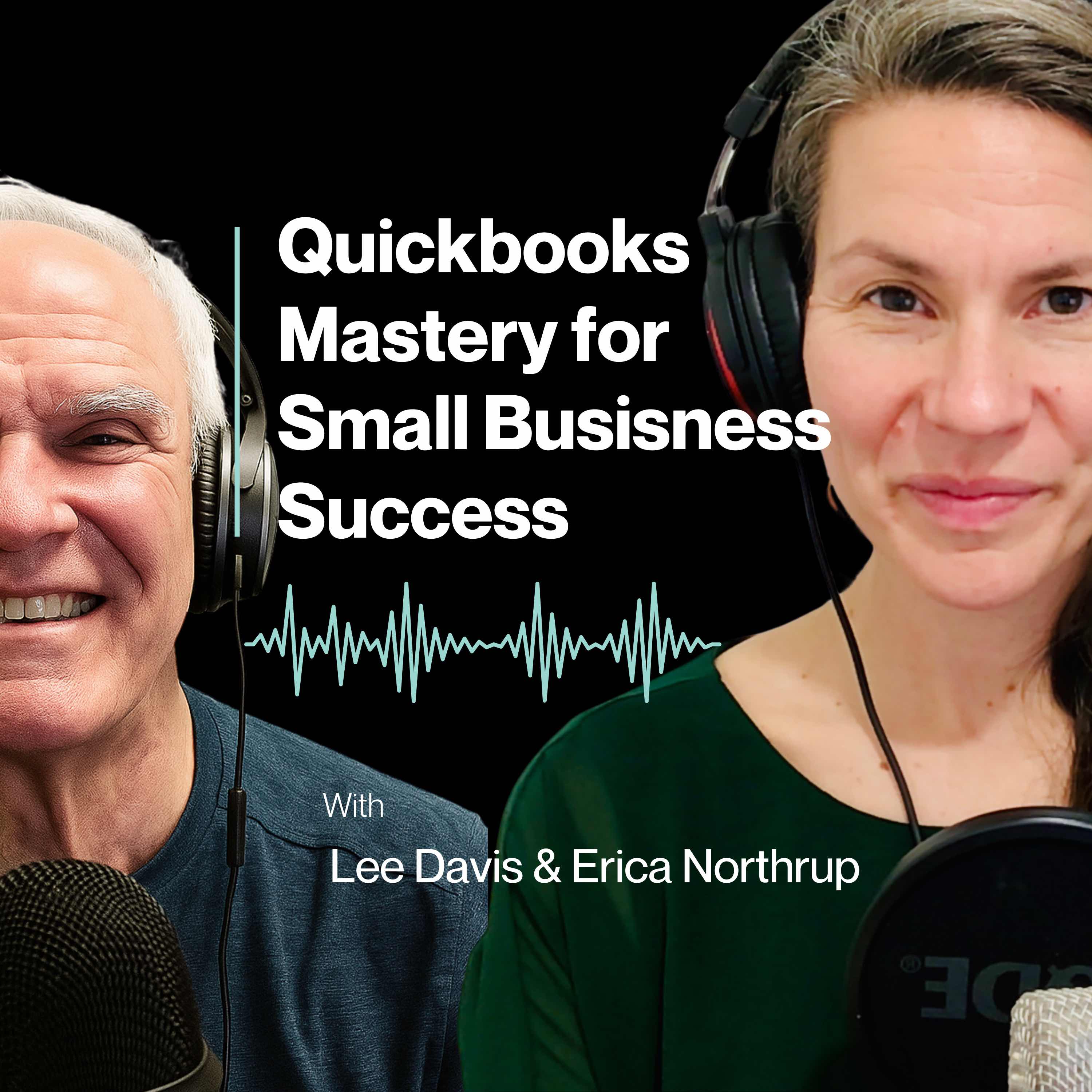
In this episode of QuickBooks Mastery for Small Business Success, father-daughter team Erica Northrup and Lee Davis break down one of the most misunderstood foundational concepts in QuickBooks.
They explain why bills, checks, and expenses are not interchangeable—and how using the wrong one can quietly create messy books, inaccurate reports, and confusion in your workflow.
If you've ever wondered:
“Does it really matter which form I use?”
This episode will give you a clear, practical answer.
Key Takeaways
- QuickBooks forms represent real-life financial events—not just data entry
- A Bill is for tracking what you owe before payment (Accounts Payable)
- A Check is for money going out immediately by cheque
- An Expense is for money going out electronically or by credit/debit card
- Using the wrong form can distort reports, duplicate expenses, and create confusion
- The simplest rule: match the form to what actually happened in real life
Questions to Reflect On
- Am I tracking bills before I pay them—or skipping Accounts Payable?
- Do my QuickBooks forms reflect how money actually moves in my business?
- Where might using the wrong form be creating confusion in my reports?
Mentioned in This Episode
Free QuickBooks Clarity Scorecard
Download at: https://lee-davis-and-company.aweb.page/unlock-clarity-free-scorecard
Send Us Your Questions:
support@leedavisandcompany.com
Timestamps
00:00 – Introduction and why this topic matters
01:17 – Why QuickBooks forms are not interchangeable
04:12 – What a bill actually means (Accounts Payable explained)
07:00 – Restaurant example: tracking food invoices properly
10:30 – What a check represents in real life
14:15 – Expense vs check (credit card vs cheque clarity)
20:15 – The simplest rule: pay now vs pay later
21:00 – What goes wrong when you use the wrong form
25:15 – What to do if your workflow is incorrect
Call to Action
If you enjoyed this episode, hit subscribe and stay connected with us at leedavisandcompany.com.
Download our free QuickBooks Clarity Scorecard to see whether your QuickBooks setup is giving you the financial insight you need.
Have a QuickBooks question? Send it to support@leedavisandcompany.com — your question may be featured in a future episode.
Transcript
Welcome to QuickBooks mastery for small Business Success.
Speaker A:I'm Erica Northrup.
Speaker B:And I'm Lee Davis.
Speaker A:I handle the tech and he handles the numbers.
Speaker A:And together as a father daughter team, we bring decades of experience helping small to medium sized businesses thrive.
Speaker B:We know that as a business owner, your time is best spent mastering your craft and growing your business, not getting lost in QuickBooks.
Speaker B:Managing finances can be confusing and you don't have hours to waste sorting through spreadsheets or fixing bookkeeping mistakes.
Speaker B:That's where we come in, helping you streamline QuickBooks so you can focus on building your business.
Speaker A:Each week we break it all down into simple, actionable steps so you can focus on growing your business, not fixing your books.
Speaker B:Let's embark on this journey together.
Speaker A:Welcome back to QuickBooks mastery for small Business Success.
Speaker A:Hi, I'm Erica Northrop, here with my papa, Lee Davis.
Speaker A:This is episode 22, Bill, check or expense?
Speaker A:Choosing the right form in QuickBooks.
Speaker A:This is one of those foundational QuickBooks topics that causes a lot more confusion than people realize.
Speaker A:A lot of business owners see forms like Bill, check and Expense and assume they are all basically doing the same thing, but they're not.
Speaker A:And when you use the wrong form, it can affect your workflow, how you track what you owe and how clearly your QuickBooks reflects what is actually happening in the business.
Speaker A:So today we're going to break down the difference between a bill, a check and an expense, when each one should be used and how to make this a lot simpler.
Speaker A:Papa, let's start here.
Speaker A:Why does choosing the right form in QuickBooks matter so much?
Speaker B:Foundationally, when you use the correct form, it helps you report your transactions in whether it's cash or accrual basis.
Speaker A:Right.
Speaker B:For example, I have a restaurant who wants to use both reporting, so the bill helps him in the accrual accounting and yet his cash receipts come through cash reporting.
Speaker B:So he's going to want to have a combination of both.
Speaker B:And I oftentimes tell people it's like they're on a modified accrual basis.
Speaker B:All right.
Speaker B:Which is a lot of what businesses are and if they understand how to report using the correct form, it will put them on the right track.
Speaker A:Absolutely.
Speaker A:Feels like a form really represents a different real life event.
Speaker A:So getting it right, if you have it right in the real life, we need it right in QuickBooks in order for everything to balance out and equal out and make sure that everything is going to the right place.
Speaker B:Yeah.
Speaker B:If you use the wrong form, the amount still may go in right.
Speaker B:But the Workflow is wrong and the numbers could be wrong.
Speaker B:This affects accounts payable.
Speaker B:It also affects how you might use QuickBooks in terms of handling when to pay a bill, for example, and relying on your data in QuickBooks so understanding foundationally how to set it up, ensure your business success.
Speaker A:Yeah, love that.
Speaker A:It just really feels like QuickBooks is built around forms.
Speaker A:If you use the wrong form, you may still get the number entered by, but you're not telling QuickBooks the right story at all.
Speaker A:Wow.
Speaker A:So this is such a helpful way to put it, Papa, because I think that it is exactly where people get tripped up.
Speaker A:They think the amount is in there, so what difference does it make?
Speaker A:But what you're saying is that the form matters because it tells QuickBooks what actually happened.
Speaker A:So let's break down these one at a time.
Speaker A:So let's start with a bill.
Speaker A:What is a bill in QuickBooks and when should someone use it?
Speaker B:Okay, well, first of all, oftentimes they get confused between bills and invoices.
Speaker B:An invoice is something you send out to your customer.
Speaker B:All right, that is an invoice and your vendor is going to send you an invoice.
Speaker B:But when you receive it, it's a considered a bill.
Speaker A:Right.
Speaker B:So a bill is something that you owe, is an accounts payable, and it is something that you may receive services now and they will send you a bill and you may pay it at a later date.
Speaker B:Could be two days, five days, could be within 30 days.
Speaker B:You set up the terms of your bill payment and it helps you with your cash flow.
Speaker B:QuickBooks can help you.
Speaker B:When you look at managing your accounts.
Speaker A:Payable, it feels like it's almost this little bell that goes off, says ding, ding, ding, ding, you owe me money.
Speaker A:That's the bill.
Speaker A:It feels like bills help track what you owe, who you owe and when it's due.
Speaker A:Would that make sense?
Speaker B:Yeah, that's right.
Speaker B:It's important for businesses to stay on top of their bills and does help you in your unpaid vendor balances.
Speaker B:And so there is some reports when you run that can tell you what payment might you want to consider to make Bill payment this week.
Speaker A:That makes sense.
Speaker A:So correct me if I'm wrong, Papa, but it feels like a bill is the right form when you owe the money, but the money has not left the bank yet.
Speaker B:Yeah, that's a good layman way of giving it.
Speaker B:The bill is still sitting in your accounts payable.
Speaker A:Right.
Speaker B:And you're going to make a bill payment at whatever method you choose to pay your bills, whether it's through your bank or whether you make a credit card payment to a vendor.
Speaker B:But QuickBooks allows flexibility in how you make a bill.
Speaker A:Yeah.
Speaker A:Okay, so this would be for something like receiving an invoice today, but not paying it until next week or the end of the month.
Speaker B:And it's an invoice when your customer sends it, and it's a bill when you receive it.
Speaker B:And clearly you're not going to be paying it today, right?
Speaker B:They're not, unless they come in and they want to check.
Speaker B:But normally you would enter that bill, and if you needed to even pay it today, you'd still put it in as a bill and make a bill payment today.
Speaker B:But typically people drop off bills and they're expected to be paid within 30 or 60 days.
Speaker A:Yeah, that makes sense.
Speaker A:I'm going to go back to that restaurant example because I feel like this is where a real world example really helps me when I think of something to really concrete tie, you know, something that I'm confused about too.
Speaker A:So let's just say you have a restaurant odor.
Speaker A:He receives food invoices from suppliers and wants to track those bills as soon as they come in, even if he's not paying them that same day.
Speaker A:That would be a bill, right?
Speaker B:That's correct.
Speaker A:Awesome.
Speaker A:That is so good.
Speaker A:I suppose that is a really good way of looking at it.
Speaker A:You get the invoice, and that is a bill for you, the restaurant owner, and you're going to pay it in a couple of days.
Speaker A:And so bill is the correct form that you would use for that particular invoice that.
Speaker A:That you're getting from a supplier.
Speaker B:And really, Ethel, one of the things that people get really confused about is why you would consider a bill versus a check.
Speaker B:Because the bill has a date on it.
Speaker B:Okay.
Speaker B:That may be a entirely different date from when you pay it.
Speaker A:Right.
Speaker B:So you want to get the correct bill date because the bill date tracks everything for you.
Speaker B:Dates are very critical for forms.
Speaker A:Okay, that makes a lot of sense.
Speaker A:So if the restaurant owner wants to track his food bills when he receives them, he should enter them as bills first, then pay those bills when the payment actually happens.
Speaker B:That's correct.
Speaker B:Use the bill payment.
Speaker A:Awesome.
Speaker A:Okay, so that makes a lot of sense because now he is not just tracking money going out, he's also tracking what he owes before it gets paid.
Speaker A:Paid.
Speaker A:So then what about a check, Bubba?
Speaker A:Let's get some clarity around a check.
Speaker B:A check it can be.
Speaker B:And people oftentimes don't quite understand.
Speaker B:Today we're in A lot of types of checks.
Speaker B:For example, a business may use an eft, electronic funds transfer.
Speaker A:Right.
Speaker B:Or people may use an ACH coming out of their bay.
Speaker B:Or somebody might physically write a check.
Speaker B:Going back to your example about the restaurant owner, he prefers to pay all the bills he can online.
Speaker B:Whether that's through the website of his vendor.
Speaker A:Yeah.
Speaker B:Or whether that might be through the bank website.
Speaker B:Yeah, whatever, whatever.
Speaker B:He can pay electronically as opposed to writing it he chooses to do.
Speaker B:But no matter the method by which you choose to make a payment, a check payment is the form used and the type on the check number is controlled how you say it's used.
Speaker B:The ACH or EFT or online QuickBooks is still designed to track check numbers, but it is not the way businesses handle today.
Speaker A:No, things have definitely progressed forward for sure.
Speaker B:And they want you to use their tools, but don't use their tools.
Speaker A:Okay.
Speaker B:When it comes to whether that's a source of revenue for them, just use your common sense tools.
Speaker B:Understanding a check.
Speaker B:It can be an ach, can be an eft, can be an online, or can be a check number.
Speaker A:So let me just clarify all that.
Speaker A:So a check is for money going out now by check this instant without setting up a bill first.
Speaker A:Would you say that's correct?
Speaker B:That's correct.
Speaker A:Love that.
Speaker A:So if the payment is happening right now and it is being paid by check, then that is when the check form makes sense, correct?
Speaker B:That's correct.
Speaker A:Yeah.
Speaker A:That's good.
Speaker A:I guess that is the key that the payment is happening right now.
Speaker A:As you said, it all goes back to the date on whatever the thing is that you're setting the form up for.
Speaker B:Well, when you use the check form, it goes to the vendor file, it reports in the vendor file.
Speaker B:Fine.
Speaker B:But it doesn't go through accounts payable.
Speaker B:So that's a key factor.
Speaker A:Okay, that's good to know.
Speaker A:So going back to that same restaurant owner, if he writes the physical check to certain vendors who do not offer online payment, that would be when he uses a check.
Speaker A:Although like you said, it also now includes the ETF and the ACH and these other sort of direct forms of payment.
Speaker B:Yeah, it uses the EFT and the ach, but the check form can.
Speaker B:And sometimes people get confused about where the forms show up.
Speaker B:So if the restaurant owner pays a makes a online every, there's a reoccurring online payment that is oftentimes reported as a check because there is no bill.
Speaker B:Okay.
Speaker B:So it's important to understand the difference between a check and a bill payment.
Speaker B:A bill payment is attached to a bill.
Speaker B:A check is just a transaction that may come through.
Speaker B:The bank fee could be an automatic ach and you just need to classify that check.
Speaker A:Right.
Speaker A:Okay.
Speaker A:It's making sense.
Speaker A:It's kind of hitting home.
Speaker A:I'm with you all people.
Speaker A:I'm getting this all straight in my mind as well.
Speaker A:This is so helpful.
Speaker A:So a bill is for tracking what you owe before payment, and a check is for money that is going out now by check.
Speaker B:That's correct.
Speaker A:Okay, I love that.
Speaker A:Then where does the expense form fit in?
Speaker B:So the expense form couple fits in a couple of ways.
Speaker B:First of all, typically when you set up a credit card account and you enter your credit card transactions that are typically going to be paid later, those are all expense.
Speaker B:You use the expense form when you download your credit card transactions and you enter those through the expense form.
Speaker B:That's the standard form for credit cards.
Speaker B:And you will also use expense forms.
Speaker B:If something comes through the bank feed and it may be a reoccurring debit transaction that you are notifying your vendor that I want to pay this, this account with a reoccurring bank transaction, it comes through your bank feed and certainly can be used in the expense form.
Speaker B:But that's not a credit card transaction.
Speaker B:That may be more of a debit card transaction.
Speaker B:One is handled through a credit card account and the other is handled through your normal bank transaction.
Speaker A:Okay.
Speaker B:And you can truly use that expense form to record it.
Speaker B:Just change the account that the expense form uses.
Speaker A:Okay.
Speaker A:So how is an expense different from a check?
Speaker B:An expense is different in the way that it's typically used for credit card transactions.
Speaker A:Okay.
Speaker B:But you're not physically writing a check.
Speaker B:All right, just think about that.
Speaker B:You don't go to your checkbook.
Speaker B:No.
Speaker B:Okay.
Speaker B:Transacting some business through your credit card, or you're transacting some business that you set up an ACH form of payment, but you're not touching your checkbook.
Speaker B:So think about the checkbook as the method by which you record a check.
Speaker A:Okay.
Speaker A:It just seems like an expenses for money going out.
Speaker A:Now, when the payment happens electronically or by credit card or by debit card rather than by a check.
Speaker A:So if you're not touching your checkbook, it's going to be an expense.
Speaker A:If you're touching your checkbook, then it's a check.
Speaker B:Yeah, that's a kind of a good rule.
Speaker A:Okay.
Speaker A:So in simple terms, check and expense are both pay now forms.
Speaker A:But the difference is usually how the payment happened in real life.
Speaker B:That's right.
Speaker B:The vehicle, whether it's a credit card or a reoccurring transaction.
Speaker B:And so many automated transactions today.
Speaker A:Right.
Speaker B:Done via ACH reoccurring.
Speaker B:And Quick says a great method to set up those reoccurring transactions so they'll match.
Speaker B:So that's a whole nother level of technology, but it generally works extremely well.
Speaker A:There is, I mean just the whole Internet and how we pay for things has changed drastically over the years.
Speaker A:Like if you go back, things used to be strictly cash or check and that was it.
Speaker A:There was no debit or credit cards.
Speaker A:And so it's opened up a lot more options and a lot more different ways that we have to track in QuickBooks.
Speaker B:Well, one tip I can give you, Erica, that would probably be worth the podcast all alone is I was working with a banker and she told me as a rule, do not give out your debit card to vendors.
Speaker B:Do not let them charge your debit card.
Speaker B:Keep your debit card private and confidential, use it on a machine, but don't give it out.
Speaker B:Because with the fraud the way it is, that debit card transaction comes right out of your checking account.
Speaker B:And once it's out of your account, you may not get it back.
Speaker A:Right.
Speaker A:It's a lot harder to recover those funds if you use the debit card, opposed to your credit card and especially with fraud.
Speaker B:So understanding that with credit card transactions they have by which to report fraud and they can return that money to your account, not so with your bank.
Speaker B:So just understanding that alone, guard your debit card and don't give it out.
Speaker A:Right?
Speaker A:If you're not doing that, make that change today, people, that could save you hundreds or thousands of dollars in fraud.
Speaker B:A lot of money.
Speaker A:Yeah, a ton of money.
Speaker A:So going back to our restaurant owner, if he has a monthly online payment or a one time purchase he makes with his credit card or debit card.
Speaker A:But people, we're not going to use our debit card for things like this.
Speaker A:That would usually be entered as an expense, correct?
Speaker B:That's exactly correct.
Speaker A:Okay, that is super helpful, Papa.
Speaker A:That is really helpful.
Speaker A:Because I think that is where a lot of people get confused.
Speaker A:They see check and expense as basically the same thing when really they are meant to reflect different kinds of payment activity.
Speaker A:So if someone listening wants the simplest possible way to remember all of this, what is the easiest rule for them?
Speaker B:Papa, you need to understand.
Speaker B:It starts with a question of how.
Speaker B:How are you paying now or later?
Speaker B:And if later, use the bill and the bill payment.
Speaker A:Right?
Speaker B:And really accounts payable is a great way to manage your cash.
Speaker B:So if you have good credit and your vendor's willing to extend it, get great terms because you're not paying interest.
Speaker B:Okay.
Speaker B:You're simply receiving a bill for some services you receive.
Speaker A:Yeah.
Speaker B:And you're paying later.
Speaker B:And if you pay your bills promptly, then that vendor is glad for it and they'll extend those terms favorable terms to you.
Speaker B:And if it's now, ask how it's to be paid.
Speaker B:If it's by check, then you're going to write a check.
Speaker B:If you set up an ACH relationship, then you run an ACH connection through your bank.
Speaker B:Very safe.
Speaker B:Because that ach, they don't have your debit card number.
Speaker B:That's where it becomes dangerous ACH transaction that you control, whether through the bank.
Speaker B:And that would be the preferable way, I would suggest, not through their website.
Speaker B:You can go on their website and make a payment, but you control it when you put the information in.
Speaker B:By putting your bank information in.
Speaker A:Yeah.
Speaker B:So it's a understanding that a bill versus a check and a bill payment.
Speaker B:So there are electronic formats of payments today that are standard forms.
Speaker B:But just remember, if you use a credit card, it's always an expense form.
Speaker B:The form should match the real life event of how that transaction moves through the banking system.
Speaker A:I suppose the easiest way to remember it is this.
Speaker A:Bill means pay later, check means pay now by check, and expense means pay now electronically.
Speaker B:That's right.
Speaker B:Yeah.
Speaker A:So simple.
Speaker A:That is such a clean way to think about it.
Speaker A:So really, bill means I owe it now and I pay it later.
Speaker A:Check means I, I'm paying it now by check.
Speaker A:Expense means I'm paying it now electronically or with a credit card or a debit card.
Speaker B:That's correct.
Speaker A:So good.
Speaker A:So that alone probably clears up a lot of confusion for people.
Speaker A:I can imagine.
Speaker A:So what kind of problems can show up when people use the wrong forms in QuickBooks?
Speaker A:Why should this even matter to them?
Speaker B:Well, it matters because people don't understand when they run the reports and they want to have their reports reflect an accrual or a modified accrual basis.
Speaker B:Okay.
Speaker B:So accounts payable.
Speaker B:If they don't use a bill, then it won't show up in accounts payable.
Speaker B:And sometimes people put bills in accounts payable and they write a check instead of a bill payment.
Speaker B:And so now they've duplicated their expense on an accrual basis.
Speaker B:So that has to get cleaned up.
Speaker B:There's no way around it.
Speaker B:So that's one of the biggest problems that people Will have.
Speaker B:And frankly, if they don't use the bill correctly, it throws off any reporting in terms of whether they owe somebody.
Speaker A:Yeah.
Speaker A:It's a massive one.
Speaker B:And vendor tracking vendor history, making sure you understand, because some vendors will be paid by check.
Speaker A:Yeah.
Speaker B:And some of them could be paid by a bill payment and some of them can be paid by ach.
Speaker B:There it can be multiple transactional work through one vendor.
Speaker B:So it's important.
Speaker B:While that's typically not the case, but keeping your vendor history accurate so you know how much you've used a particular vendor is extremely helpful when you're looking at budgeting and cash flow.
Speaker B:And the reporting is easier to track when you kind of use these basic principles.
Speaker A:There is one thing I just want to back up two seconds because you've mentioned this a lot and for all of our non accountants out there, including me.
Speaker A:Okay.
Speaker A:Remember, I'm the marketing girl.
Speaker A:I'm the podcast girl.
Speaker A:That's what I'm good.
Speaker A:I've gotten good at learning about all this, which has been incredibly valuable as I've worked with you over the last 10 years, you know, a little over a decade now.
Speaker A:Break down what is accrual because I think eventually we're going to have an episode that is all around accounting terms and all of that.
Speaker A:But for people that don't understand what accrual is, can you just give us like a little nugget of a definition of accrual?
Speaker B:Yes.
Speaker B:So accrual is when you receive a service.
Speaker B:Okay.
Speaker B:That you're going to record it as a payable.
Speaker B:All right.
Speaker B:It's something that you've received today, but you owe tomorrow.
Speaker B:So you're going to set that up on and consider that accrual accounting.
Speaker B:And because when you run your reports, it will not be when you pay the bill that is critical, but it's when you incur the bill.
Speaker B:So when you think about it from an accrual perspective, and quite frankly, sales is oftentimes it's not when you receive the money, quite frankly, it's when you generate the sale, when you make.
Speaker B:So when you think about using accounts receivable and accounts payable, that's all done on the accrual basis.
Speaker A:Okay.
Speaker B:And quite frankly, it's a better picture of how the health of the business is.
Speaker A:Okay.
Speaker A:That is so good.
Speaker A:So just going back a second now.
Speaker A:So when people use the wrong forms, quickbook becomes less clear because it no longer reflects what's actually happened in the business.
Speaker A:Is that correct?
Speaker B:You got it.
Speaker A:I love that.
Speaker A:So I think that is the real point here.
Speaker A:Right.
Speaker A:That is not just about using the right button for the sake of it.
Speaker A:It is about making sure QuickBooks actually reflects reality in a clean and useful way.
Speaker A:So if someone listening realizes they may have been using these forms incorrectly, Papa, what should they do first?
Speaker B:Yeah, well, I think the first thing is just don't panic.
Speaker A:Right?
Speaker B:Don't panic.
Speaker A:Don't throw up red flags.
Speaker B:Right.
Speaker B:Start by understanding the purpose of each form.
Speaker B:And I think we've laid that out pretty clearly.
Speaker A:Yeah.
Speaker B:Review your current workflow.
Speaker B:If you don't do the data entry, just make sure you document the workflow and just ask some basic questions.
Speaker B:Something that I owe now and I'll pay later or do I pay it immediately?
Speaker B:Either way, it may be a bill, but it may be your bill.
Speaker B:Payment timing is whatever.
Speaker B:But if it's a check, then ask yourself, am I paying it?
Speaker B:Do I need a bill?
Speaker B:Or is it something I pay reoccurring and I don't get a bill?
Speaker B:Just ask yourself some basic questions and then choose to use the correct form going forward.
Speaker A:That is so good.
Speaker B:You know, inconsistency matters.
Speaker B:So just start today and get it written down.
Speaker B:The process.
Speaker A:That is such great advice because you do not have to fix everything overnight.
Speaker A:But once you understand what each form is for, it becomes much easier to keep QuickBooks clean going forward.
Speaker A:I am sure.
Speaker A:So, so, Papa, that was just so helpful because this is one of those small foundational things that can make a huge difference over time.
Speaker A:If you're listening to this and realizing there are parts of QuickBooks you were never really taught about or never encountered, you are not alone.
Speaker A:That is exactly why we created the QuickBooks Clarity Scorecard.
Speaker A:It is a simple way to help you see see where your QuickBooks setup may be strong, where the gaps may be, and what to focus on next.
Speaker A:So grab the QuickBooks Clarity Scorecard in the show notes or on Leedavis and company.com and use it as your next step toward cleaner books and more confidence in your numbers.
Speaker A:Because the goal is not just to get transactions entered.
Speaker A:The goal is to understand what you're doing, use QuickBooks the right way, and move move forward with clarity.
Speaker A:Thanks for listening to QuickBooks mastery for small Business Success.
Speaker A:We'll see you next week, you guys.
Speaker A:Bye for now.
Speaker A:Thanks for tuning in to QuickBooks mastery for small Business Success.
Speaker B:If you enjoyed this episode, hit subscribe and stay connected with us at leedavis.
Speaker A:And company.com we know QuickBooks can be overwhelming, so we've put together a free resource to help you get started right away.
Speaker A:Away.
Speaker A:Grab your copy@leedavis and company.com and when you do, you'll also get access to our VIP email list where we share exclusive QuickBooks tips, business strategies and support.
Speaker B:And we'd love to hear from you.
Speaker B:If you have a QuickBooks question or a business challenge, send it our way@supporteadavidsoncompany.com we might feature it in a future episode.
Speaker A:We're here to help you simplify QuickBooks and grow your business one step at a time.
Speaker A:See you next time.