Episode 23
Episode 23: The 3 QuickBooks Workflows Every Business Owner Needs to Get Right
Episode Title
Episode 23: The 3 QuickBooks Workflows Every Business Owner Needs to Get Right
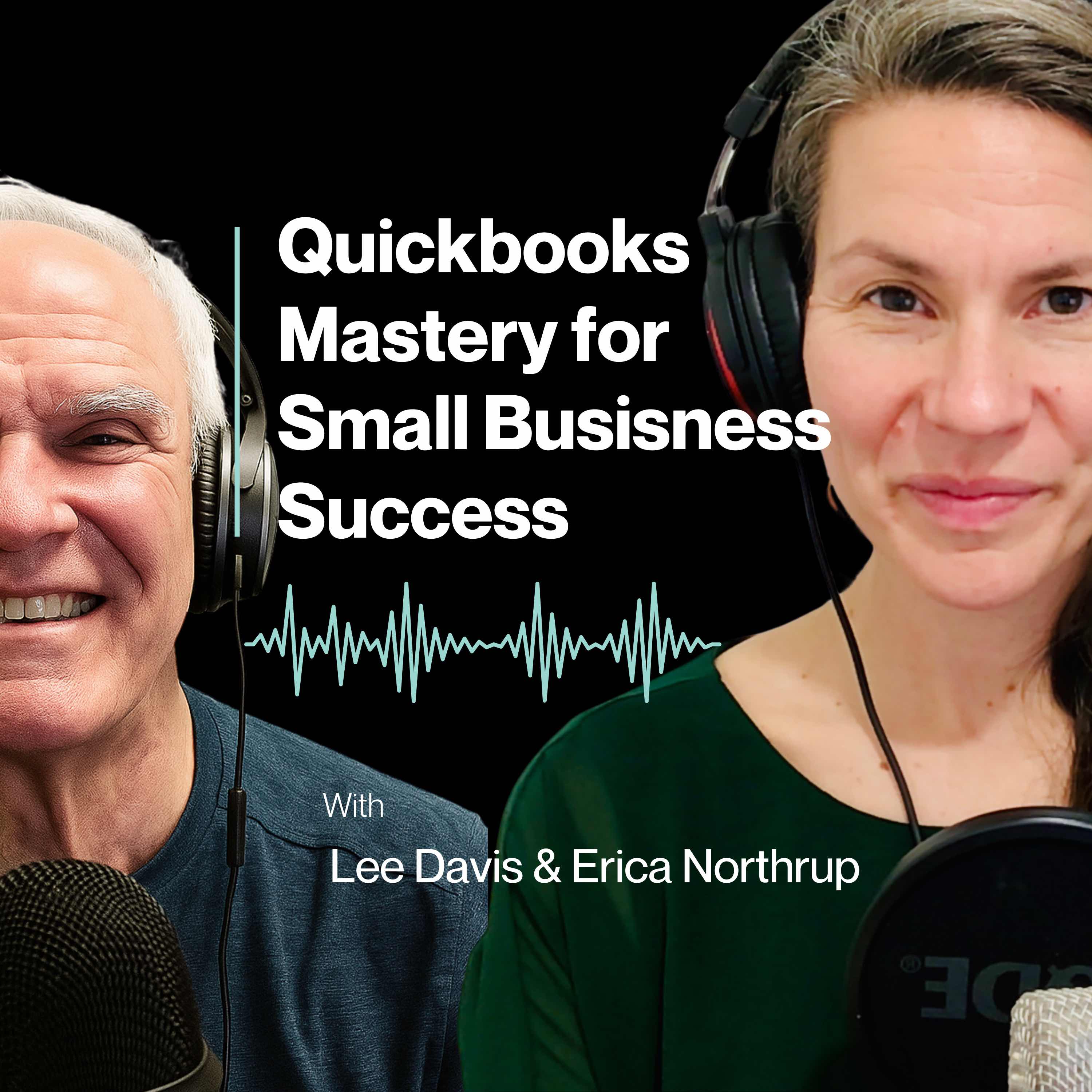
In this episode of QuickBooks Mastery for Small Business Success, father-daughter team Erica Northrup and Lee Davis break down the three core QuickBooks workflows every small business owner needs to understand: money in, money out, and month-end.
They explain why messy QuickBooks files are often not caused by one big mistake, but by inconsistent workflows repeated over time. Lee shares how business owners often rely too heavily on the bank feed, skip important steps, mix up forms, or fail to close out the month properly.
This episode helps business owners see QuickBooks as a system — not just a tool — so they can build cleaner books, more reliable reports, and better financial clarity.
Key Takeaways
- Most QuickBooks problems are really workflow problems.
- The three essential workflows are money in, money out, and month-end.
- A consistent money-in workflow helps prevent missing or double-counted revenue.
- A clear money-out workflow helps business owners understand what they owe versus what they have already paid.
- Month-end review turns QuickBooks from data entry into decision-making.
- Consistency matters more than perfection when building better QuickBooks habits.
Questions to Reflect On
- Is your money-in process consistent every time revenue enters your business?
- Are you clearly tracking the difference between bills, expenses, checks, and payments?
- Do you close out each month, reconcile accounts, and review your reports?
- Are your QuickBooks reports giving you clarity — or creating more confusion?
Mentioned in This Episode
Free QuickBooks Clarity Scorecard
Download at: https://lee-davis-and-company.aweb.page/unlock-clarity-free-scorecard
Send Us Your Questions:
support@leedavisandcompany.com
Related Episode:
Episode 22: Bill, Check, or Expense? Choosing the Right Form in QuickBooks
Recommended Resources
- QuickBooks Clarity Scorecard
- Episode 22: Bill, Check, or Expense? Choosing the Right Form in QuickBooks
Timestamps
00:00 — Why QuickBooks Workflows Matter
01:04 — Why QuickBooks Problems Often Start with Workflow
05:27 — Workflow #1: Money In
14:23 — Workflow #2: Money Out
22:06 — Workflow #3: Month-End Process
37:59 — Where to Start if Your QuickBooks Feels Inconsistent
Call to Action
If you enjoyed this episode, hit subscribe and stay connected with us at leedavisandcompany.com.
Download our free QuickBooks Clarity Scorecard to see whether your QuickBooks setup is giving you the financial insight you need.
Have a QuickBooks question? Send it to support@leedavisandcompany.com — your question may be featured in a future episode.
Transcript
Welcome back to QuickBooks mastery for small Business Success.
Speaker A:I'm Eric Northrup here with my papa, Lee Davis.
Speaker A:This is episode 23, the three QuickBooks workflows every business owner needs to get right.
Speaker A:Money in, money out and month end.
Speaker A:Over the last few episodes, we've talked about cleaning up QuickBooks, choosing the right forms, and what to fix first when your numbers feel off.
Speaker A:But underneath all of that, there's a bigger idea that really drives whether QuickBooks work works or not, and that's workflow.
Speaker A:Because for most business owners, the issue isn't that they don't know QuickBooks, it's that the way things are being done inside QuickBooks isn't consistent.
Speaker A:So in this episode, we're going to break this down into three core workflows that every business owner needs to get right.
Speaker A:Not everything in QuickBooks, just these three.
Speaker A:Because if these are working, everything else starts to fall into place.
Speaker A:So, Papa, when you look at a QuickBooks file that's messy or not reliable, how often does it come back to workflow?
Speaker B:Oh, it starts with workflow and the fact that quite frequently people will use the bank feed as their workflow.
Speaker B:And that's where the problem begins because most clients don't understand the workflow in how the bank feed works.
Speaker B:Okay, so that just adds to the overall problem.
Speaker A:That makes a lot of sense.
Speaker A:It really feels like it's these small inconsistencies that they repeat and they build up.
Speaker A:And at the end of the day, that's what's really causing a lot of issues for people that are using QuickBooks.
Speaker B:Yeah, you know, sometimes we just figure out the shortest way.
Speaker B:They'll think it's the easiest and they'll use that.
Speaker A:Right.
Speaker B:Because sometimes they think QuickBooks takes too much time, to be honest.
Speaker B:Sometimes.
Speaker B:Sometimes that's the case.
Speaker A:That makes sense, I'm sure.
Speaker A:So what we've really been talking about, alluding to over the last several months in the episodes that we've been recording and talking through, is that really it boils down to having a system.
Speaker A:And that really makes a big difference for people because when there's no system behind it, you're just kind of doing things willy nilly, all different kinds of ways and it just doesn't make sense.
Speaker A:At the end of the day, it's.
Speaker B:System that somehow gets handed down.
Speaker B:Do you remember when you played telephone as a kid?
Speaker A:Oh, sure, of course, yeah.
Speaker B:And one person starts and they whisper something and it gets around.
Speaker A:Y.
Speaker B:Well, that's a lot of the way people treat QuickBooks.
Speaker B:If they're not trained.
Speaker B:Somebody set it up.
Speaker A:Yeah.
Speaker B:And they didn't really have the background it took to set it up, and then they left.
Speaker B:And then somebody comes in and they don't know QuickBooks, but they're using it the way it was set up.
Speaker B:And then they may bring somebody in who's not trained, and they use QuickBooks a certain way.
Speaker B:So I think at the end of the day, it's a total mess.
Speaker B:And that person thought they were doing a good job because they used Quicken back in the day.
Speaker B:And they think that QuickBooks and Quicken are the same, which they're not.
Speaker B:You know, there is a base of starting point that you have to say, okay, we're going to whitewash the whole thing.
Speaker B:All right.
Speaker B:And we're going to start at the beginning.
Speaker A:Yeah, that makes sense.
Speaker A:So I guess what it boils down to is a lot of times QuickBooks isn't broken.
Speaker A:It's just reflecting a process that isn't consistent.
Speaker A:Something that's been passed down from person to person saying, okay, this is how you do it.
Speaker A:But then the way they're doing it is not the most ideal way to do it.
Speaker A:So they haven't locked into the system that really works well with QuickBooks.
Speaker B:You're absolutely correct.
Speaker B:Yeah.
Speaker A:Okay, so it's less about learning more features and more about doing the same thing the same way every time.
Speaker A:Would you say that that is correct, Papa?
Speaker B:Well, I would say getting back to the basics, things that we've been talking about in the podcast, about how QuickBooks is based on forms and lists and with the backbone being the chart of accounts and understanding some basic accounting procedures.
Speaker B:So I think it makes sense when you talk about the workflows of understanding that you don't want to add more complexities.
Speaker B:You don't want to just say, okay, well, I think I want to make this change, this change and this change until you.
Speaker B:You have some basic checks and balances in place and that you understand how the reporting is working or how the process should be in the various steps to completing a task.
Speaker B:Because you can't jump over the procedures.
Speaker B:You can't just go from point A to Z without making sure you understand what.
Speaker B:What each step, how that works and how QuickBooks will get to the end result.
Speaker A:Okay, love that.
Speaker A:That does make a whole lot of sense, because now, instead of trying to fix random issues, we can actually focus on the purpose behind it.
Speaker A:So let's break this down into these three workflows.
Speaker A:So what is the first one that we want People to focus on.
Speaker A:Papa.
Speaker B:We want to focus on money in.
Speaker B:And it's how I will normally like to start in the first module in our training.
Speaker B:How do people make money?
Speaker A:Yeah.
Speaker B:And how do they invoice?
Speaker B:How do they get paid?
Speaker A:Yeah.
Speaker B:So looking at the different forms like invoices, sales receipts, payments and deposits, I see the fact that this is one of the confusing elements in QuickBooks.
Speaker A:Yeah.
Speaker B:Because QuickBooks is not a software that's designed as double entry.
Speaker B:And it's a little confusing for people to think about that.
Speaker B:The form is the other side of the entry.
Speaker A:Can you break down.
Speaker A:When you say double entry, break.
Speaker A:Break that down for us a little more.
Speaker B:Yeah.
Speaker B:So a double entry is best used, for example, in the general journal.
Speaker B:Okay.
Speaker B:Where you have a transaction, where we have one transaction.
Speaker B:So if you have cash, and cash is on the left hand side, if you will, or the debit, and then you have sales money that comes from sales, that goes on the right side.
Speaker B:Okay.
Speaker B:Or the credit.
Speaker B:And that could be done through the general journal.
Speaker B:And the general journal has a place, of course, in QuickBooks.
Speaker B:Right.
Speaker B:You make journal entries, but not for routine transactions like sales or cash or expenses.
Speaker B:So Cooks uses these forms to make the other side of the entry.
Speaker B:So you are only responsible to use the form to categorize one side of the transaction.
Speaker A:Okay.
Speaker B:QuickBooks uses the form to make the other side of the entry.
Speaker B:Does that help you?
Speaker A:Yeah.
Speaker A:So when you say double entry, is this where people are not leaning into what QuickBooks does and they will enter the information themselves incorrectly in the wrong place?
Speaker B:Yeah, well, sometimes people don't because Quicken is treated more like a checkbook.
Speaker B:Okay.
Speaker B:And people will use QuickBooks like that.
Speaker B:They'll use the register instead of understanding that there's a form that does that work for them.
Speaker B:So they make a lot of work.
Speaker B:They don't need to.
Speaker B:They don't need to.
Speaker B:And the register doesn't help them in reporting.
Speaker B:All right.
Speaker B:If you use the register that way, it simply is like a glorified checkbook.
Speaker B:It will take you twice as long.
Speaker B:So just understanding that if you get the forms right, you're almost 60 to 70% there, if not 80, because the forms are huge.
Speaker B:Forms are understanding the invoice and the sales receipt and the payments and the deposits.
Speaker B:That's where a lot of the mistakes happen.
Speaker A:Yeah.
Speaker B:And people will skip the steps.
Speaker B:Like a good example we've talked about this before, is that sometimes people will just go and they'll send out an invoice.
Speaker B:They'll Skip the received payment and they'll go right to put in the deposit.
Speaker B:All right.
Speaker B:Now they've.
Speaker B:On an accrual basis, which is the fact that when you think about accounts receivable.
Speaker A:Yeah.
Speaker B:They put in their invoice, they've made a charge.
Speaker B:But QuickBooks doesn't understand the fact that deposit wasn't handled correctly.
Speaker B:So they're still waiting for you to receive payment.
Speaker B:All right.
Speaker B:And so when you go right to the deposit feature, put in a deposit, and maybe you've taken that right from the bank feed.
Speaker A:Yeah.
Speaker B:And you're just put it right into sales.
Speaker B:Okay.
Speaker B:Yes, it'll go into your bank account, but now you'll have double income.
Speaker A:Right.
Speaker B:Oh, so there's a lot of mistakes that will happen.
Speaker A:Yeah.
Speaker B:And people are.
Speaker B:Well meaning, of course, they'll skip step.
Speaker A:But you don't know what you don't know until you know what you know.
Speaker A:Right?
Speaker B:That's right.
Speaker A:I mean, that's what it comes down to.
Speaker A:Absolutely.
Speaker A:Okay, so if I'm hearing this all correctly, if your money in workflow is not consistent, your revenue number is not reliable.
Speaker B:You're right.
Speaker A:Right on the money, huh?
Speaker B:Right on the.
Speaker A:Okay.
Speaker A:So what does a clean, consistent money in workflow actually look like for people?
Speaker B:Well, it looks like that, if you understand, it could be a little bit different for every business, whether you happen to use a sales receipt or whether you happen to create an invoice.
Speaker B:But sometimes it starts from the very beginning, where you might look at.
Speaker B:If you're a contractor, you might be creating an estimate.
Speaker B:All right.
Speaker B:And the estimate has some features that help you take from the beginning to creating the invoice, to making the received payment, that in turn winds up matching with your bank deposit.
Speaker B:I believe that if you decide that whatever form works for your business is the right form to use.
Speaker B:And it could be a combination of forms.
Speaker B:You might use a sales receipt for one thing, and you might need to be using invoices.
Speaker B:An invoice.
Speaker B:And you might even want to choose to have a purchase order.
Speaker B:You might.
Speaker B:Depending on the tracking of how you look at expenses, you may say, you know, I'd like to create a purchase order for this vendor, and that tracks right through the bill pay feature.
Speaker B:So you want to understand the value of the process.
Speaker B:I guess that's really important.
Speaker B:Where I sometimes talk about people with customers, with clients, about how forms can really make their lives easier.
Speaker B:Because if you chose to use an example as a purchase order, you would place that purchase order with the vendor, and then you could see if you got all your items or some were back ordered, you know, whatever process is important to you, and that starts at the very beginning with the inventory.
Speaker B:So, again, if inventory is something that's important for a retailer, then a purchase order is definitely a form that we spend some time on.
Speaker B:But it varies with how each business sets their priorities.
Speaker A:Absolutely.
Speaker A:And I guess it also then comes down to however each business decides to record things, or whatever the case may be, how they decide to set things up, it's that they're doing it the same way every single time.
Speaker A:They're not mixing and matching different workflows for the same exact thing they're entering or whatever the case may be.
Speaker B:I talked with a young man who had a failed business, and he said, my problem was I can understand the trade.
Speaker B:I know how I need to conduct my craft.
Speaker B:I've got that really well.
Speaker B:But what I didn't get was the setup in QuickBooks.
Speaker B:I didn't understand how the.
Speaker B:The accounts worked, what was an asset, you know, what was a liability.
Speaker B:And no matter what I did, I couldn't get that.
Speaker B:And he's now listening to our podcast and saying, oh, you know what?
Speaker B:You teach people how to set it up correctly.
Speaker B:So I think somebody like him is who we're trying to reach.
Speaker B:So I think I say that to say, no matter when you look at people working in QuickBooks, there is some really good basic knowledge that will help them go and get started and feel good about making steps forward in their business.
Speaker A:Yeah, okay, I love that.
Speaker A:So what are some signs that this workflow might be off?
Speaker A:So if everything isn't tying together, what are some of those big red flags that it's just not working?
Speaker B:It will definitely show up in their chart of accounts.
Speaker B:It will show up in their registers, their.
Speaker B:Particularly their bank register, and it will show up in their accounts receivable, and it will show up in their various steps.
Speaker B:For example, like the bank feed, they can't match it.
Speaker B:And that the bank feed may grow because they're uncertain, they're unsure, and they could have a lot of uncategorized income.
Speaker B:And they could also show up in their payroll, where they put a lot of things to payroll expenses that belong in wages.
Speaker B:So they could have a real mess to go back in and have to correct.
Speaker A:That makes a lot of sense, Peppa, because, you know, there is so many avenues where we have seen time and again, when something isn't working right, which is so obvious, it's right in your face.
Speaker A:So right away, if the money coming in isn't being tracked properly, everything else flows, starts to fall apart.
Speaker A:Once that's in place, what's the next workflow?
Speaker B:Well, I think we look at money out and how the expenses are recorded.
Speaker B:And you know, this includes really understanding a little bit about how accounting works.
Speaker B:Just like we kind of need to understand that when the revenue comes in on an accrual basis, we need to understand how bills, expenses, checks and payments are handled.
Speaker B:So really when you get the fact that when a bill comes either in your inbox, in your email or it comes snail mail, a bill comes in and that bill gets categorized and how it goes to the correct vendor and you know where it's recorded, you know that it's recorded as a bill, then that bill is able to be managed.
Speaker B:You can determine when you will pay that bill because there is a bill payment feature.
Speaker B:Feature.
Speaker B:Yeah, pay a bill or if there are some expenses that are reoccurring and you can set those up as reoccurring expenses and expenses may very well and should be treated through a credit card.
Speaker B:If it isn't, it's a big red flag because that's foundational for QuickBooks and when you write checks.
Speaker B:So I have seen it, of course, where people will enter a bill and pay that bill by writing a check.
Speaker B:And that makes perfect sense from a non quickbook understanding.
Speaker B:Right.
Speaker B:You put a bill in and you write a check.
Speaker A:Yeah, absolutely.
Speaker B:Not so fast.
Speaker B:Because when you put a bill in, you have to pay a bill.
Speaker B:All right.
Speaker B:So the checks are really used for the feature of if you are writing a check and you're going to just expense that check, you didn't put the bill in.
Speaker A:Right.
Speaker B:And you're writing a check.
Speaker B:And so I think just understanding that, I think this is where I think when we did episode 22, this really ties in.
Speaker B:So go back and listen to that episode.
Speaker B:Right.
Speaker A:I was just thinking about that.
Speaker A:If you do struggle with understanding a bill, a check, an expense, and the difference between the three, go back and listen to episode 22 from last week because that was a total deep dive into all of of this.
Speaker A:That will really give you a comprehensive full picture view of what the money out looks like in QuickBooks.
Speaker A:That's awesome.
Speaker B:And people do get confused.
Speaker B:I think books is to blame for it because they don't necessarily give you a good training tool and people do mix bills, expenses and checks and, and they don't track what they owe versus what they've been paid.
Speaker B:And so sometimes trying to sort out how much you do owe what you did pay becomes a mixed up mess.
Speaker B:So I think just understanding that starting with complete information in the vendor file is always the right way to start.
Speaker B:All right.
Speaker B:And looking at how you want to record your.
Speaker B:And categorize your expenses in whatever form you.
Speaker B:You.
Speaker B:Whether that's a bill or a check or an expense.
Speaker B:Because if you want to compare information, it's helpful to go back to your chart of accounts and look at.
Speaker B:Even go back to your schedule C. Yeah.
Speaker B:If you will.
Speaker B:And start there with your basic expenses.
Speaker B:Because you can't go wrong with that.
Speaker A:No, you really can't.
Speaker A:You know, it does really appear if you don't separate what you owe from what you've already paid, you don't actually know your financial position.
Speaker A:And at the end of the day is what QuickBooks is.
Speaker A:That's where it's powerful.
Speaker A:That's where it really shines, is helping you to further your business and grow your business in a way that is going to serve you for months and years and, and decades to come, really, if you do it right.
Speaker B:Yeah.
Speaker B:I was just talking with the client who.
Speaker B:They've just come out of a terrible mess and it almost sunk the company.
Speaker B:And it's because the administrator didn't have an understanding on the overall finance and the board wasn't keeping track of what the administrator was doing.
Speaker B:And there was rampant use of a credit card and the expenses were out of control.
Speaker B:And at some point the board stepped in and said, okay, I think we're being very close to bankrupt.
Speaker B:We have to hire somebody, bring them on, help us guide them.
Speaker B:And they brought our firm on and we helped them.
Speaker B:And I'm pleased to say that they're on the road to recovery.
Speaker A:That's great.
Speaker B:They're doing quite well.
Speaker B:That's awesome.
Speaker A:And that's what it's all about, I.
Speaker B:Think, getting some of the very basic.
Speaker B:You know, they could save a lot of money by listening to our podcast because given a lot of that same good information.
Speaker A:Yeah, absolutely.
Speaker A:So this is not just about recording expenses.
Speaker A:It's about timing and structure as well.
Speaker A:And that's what we really want people to tune into.
Speaker B:Yeah, absolutely.
Speaker B:That.
Speaker B:It's just about making sure that you follow good business principles.
Speaker B:I hate to say it, but it just means that a little bit of business training could help you a long way.
Speaker A:Yeah.
Speaker A:Having those just basics.
Speaker A:And I feel like we have an episode on the horizon that's really going to help people with those basics.
Speaker A:So be listening, tune in.
Speaker A:Okay, so what are some red flags in the money out workflow that you might see.
Speaker B:I think sometimes if we can just step back for a minute.
Speaker B:And sometimes my clients don't understand the difference between an invoice and a bill.
Speaker B:And it is important and it's confusing because if you're a client and you have a customer, you send out an invoice.
Speaker B:You send out an invoice.
Speaker A:It's what you do.
Speaker B:And, and they, if you have somebody who's a vendor.
Speaker A:Yeah.
Speaker B:And they send you an invoice.
Speaker A:Right.
Speaker B:That turns into a bill.
Speaker A:Right.
Speaker B:So getting the language, it's like a foreign language in QuickBooks.
Speaker B:Accounting is generally a foreign language.
Speaker B:When I found I taught accounting many times, my students would say, oh, I don't understand it.
Speaker A:I guess we all need 101 language accounting.
Speaker B:That's right.
Speaker B:And then when you see the light come on.
Speaker A:Yeah.
Speaker B:Oh, that's what it is.
Speaker A:Yeah.
Speaker B:So I really do think making sure that you understand how QuickBooks the forms of what a bill is, it's helpful.
Speaker B:It just makes it.
Speaker B:Oh, it's easy.
Speaker B:This is a bill.
Speaker B:So quite frequently that when there are missing expenses or expenses get recorded in the wrong period, bills are not tracked.
Speaker B:Vendor balances can't be used.
Speaker A:Yeah.
Speaker B:And people might pay.
Speaker B:Just cash out.
Speaker A:Yeah.
Speaker A:You know, major cash flow problems.
Speaker B:Yes.
Speaker A:Yeah.
Speaker B:You know, it could be just understanding about a very simple.
Speaker B:What do I owe?
Speaker A:Yeah, absolutely.
Speaker B:And so there you can avoid all that confusion.
Speaker B:And sometimes you just have to put a stake in the ground and say, okay, send me the statement of what's owed and let me put that in.
Speaker A:Yeah, absolutely.
Speaker B:And here's how we're going to handle all the bills coming forward.
Speaker A:Okay.
Speaker B:And love that.
Speaker B:Yes.
Speaker A:Okay.
Speaker A:So.
Speaker A:And now feel like we've got money in being handled correctly, money out being handled correctly.
Speaker A:But that still doesn't mean the numbers are being reviewed or validated.
Speaker A:So that brings us to the third workflow that we want to focus on.
Speaker A:Papa.
Speaker A:And what is that?
Speaker B:Yeah, that would be the month end processes.
Speaker B:I was just talking with another client who said, you know, Lee, the problem sometimes with us is when we use the QuickBooks monthly reports, we don't really understand them.
Speaker B:We glaze over.
Speaker B:And honestly I do think that is real disease with my clients.
Speaker B:Too much data and you know, they're overwhelmed.
Speaker A:Right.
Speaker A:It is overwhelming.
Speaker B:Absolutely.
Speaker B:I was talking with a guy who was an engineer, so he understood re engineering the process, Right?
Speaker A:Yeah.
Speaker B:Yeah.
Speaker B:Let's find out what exactly the board can tolerate because you know, frankly in a one hour meeting that the board might have once a month, can't spend the entire month, hour or two hours on the financial reporting.
Speaker B:They need it synthesized down, they need the snapshot and they want to understand it and the treasurer has got to explain it.
Speaker B:Yeah, okay, in 15 minutes.
Speaker B:So I think the idea is from a back end perspective, the financial administrator needs to be able to have some checks and balances of how the information is reviewed and whether that's daily, weekly, monthly.
Speaker B:And of course, from a accounting perspective, you need to have a bank reconciliation.
Speaker B:You know, the bank reconciliation is a real important tool and can tell you just quickly if there's some expenses or some checks that are outstanding that need to get reviewed and may be considered expenses, but they're duplicate or there's some missing information.
Speaker B:So reviewing the transactions that are in that bank reconciliation are really helpful.
Speaker B:And also running the reports after you reconcile your bank account, if you run profit, loss and your balance sheet, those are two reports that you can quickly get a summary and see how they compare and contrast to the previous year or the previous month.
Speaker B:And again, sometimes I tell my clients to just focus on a couple of those accounts.
Speaker A:Right, Absolutely.
Speaker B:And so this is what turns activity into useful information for them.
Speaker B:And we've talked about this in a prior podcast, but that one of the reports that is least used is the cash flow report.
Speaker B:And that might, after all be the most important tool.
Speaker A:Yes.
Speaker B:For a client if they just will use it and understand, oh, what's happening to my cash.
Speaker A:Right.
Speaker B:You know, because cash is king.
Speaker A:Cash is king, absolutely.
Speaker A:So I feel like this is where QuickBooks goes from data entry to decision making.
Speaker A:Yeah, yeah.
Speaker A:It's really powerful.
Speaker A:So why do you think this is the one that gets skipped the most, Papa?
Speaker B:Because I think people don't want to take time.
Speaker B:I just think that businesses run on a put the fire out.
Speaker B:I think we've got to put these fires out.
Speaker B:And so if they're overdrawn on their bank account, you know, they may be a company, a small company that the owner wears too many hats and they haven't figured it out of the importance of having the workflows correct or having the people processes figured out.
Speaker B:Yeah, but you know, having where you move from being a fireman to a strategy person is really takes multiple steps.
Speaker B:And if you're putting out fires, you have no time figure out how you need to move beyond that.
Speaker B:And so if I see clients who can understand that and say, okay, what do I need to do?
Speaker A:I feel like it does come back to something we've talked about.
Speaker A:Before, but it is going from being a reactive CEO or reactive business owner to being a proactive, to being someone that.
Speaker A:And I find this about even in home life and even things that I do.
Speaker A:You know, we go to this great place here called Canada Games and we go swimming.
Speaker A:And I find that whole experience, experience goes better if I'm thinking ahead of what is the next step, like what is the next thing that we need to do.
Speaker A:And laying our towels out on the top shelf and pulling out certain things.
Speaker A:Just prepping, getting things ready so that when we come out of swimming, it's not this massive, you know, looking for everything.
Speaker A:It's grab and go and we're in and out of there way quicker.
Speaker A:And that is, I think, a lot of times in business, I think where we're lacking is we're not strategically being intentional with what we're doing.
Speaker A:Laying the foundation first, thinking through things before we just react to them, before we just get to putting out fires.
Speaker A:So instead, you know, and it's also then taking time in your day, right.
Speaker A:To have time to be intentional, to think through all the things, not just react.
Speaker A:What's happening.
Speaker B:Yeah, I think, you know, there's a basic organizational principle I think that will really help people, and that is if you pick up something, you don't put it back down till you've handled it.
Speaker B:You know, pick it up, whatever it is.
Speaker B:If, if that's some tool that you are going to use, like for your, your project you've been working on, pick the tool up and you use it and you complete the task and you put it down.
Speaker B:Right.
Speaker B:And you file it away or it's done.
Speaker A:Absolutely.
Speaker B:Pick it up and put it down until.
Speaker B:And handle it later.
Speaker A:Yes.
Speaker B:Or put it off.
Speaker B:Because QuickBooks can be easily.
Speaker B:People can decide that they can put it off.
Speaker A:Yeah.
Speaker B:I think.
Speaker B:But organizationally, just even if it takes you longer to handle something and it's done, then you can move on to the next task.
Speaker A:It saves you mental energy.
Speaker A:It saves you from having to touch that thing twice.
Speaker A:So it's going to save you time in the long run if you just tackle it right away.
Speaker B:Right.
Speaker A:I love that.
Speaker A:Okay, so what does a strong month end process look like, Papa?
Speaker B:I think a strong month process starts with the checks and balances through them, and businesses need checks and balances.
Speaker B:Oftentimes people say, well, what do I need that for?
Speaker B:Well, you need that because if somebody steals from you, you need to know that they're stealing and you need to have people who don't both Take money in and deposit money.
Speaker A:Right.
Speaker B:Very clear.
Speaker B:And a good accountant can identify areas where the business is losing money.
Speaker B:So I think it starts with some good procedures.
Speaker B:Internal controls.
Speaker A:Yeah.
Speaker B:And it filters right through where you have processes that you complete at the end of the month that are where you will make sure that your cash is verified.
Speaker B:Okay.
Speaker B:That all of your transactional work in sales, you've captured all of your revenue, and that you have some good procedures for tracking your expenses, that you have your credit card statements and that all of those accounts have been reconciled.
Speaker A:Yes, absolutely.
Speaker B:And you have some standard reports that you look at, run every month at the same time, and so that you can look at them quickly.
Speaker B:And so it's not a matter that you have to say, oh, that's wrong, or that's wrong, or no, you might look at it and say, oh, there could be some areas that you want to take a look at this month.
Speaker B:That would be just a quick ten minutes.
Speaker B:All right.
Speaker B:That.
Speaker B:And you kept it from last month or whatever interests you that you could make some business decisions on.
Speaker A:Right, Absolutely.
Speaker A:Because that is what this is all about.
Speaker A:You know, if you don't close your month, you're guessing you're not running a business.
Speaker A:And that is what we are here to do is run strong and powerful businesses that change lives.
Speaker A:Because the end of the day, that's why you started a business.
Speaker B:Right.
Speaker A:Love that.
Speaker A:Okay.
Speaker A:That's such a powerful distinction, because this is really where confidence comes from.
Speaker A:Not just having numbers, but knowing they're right.
Speaker A:So how do these three workflows actually connect in real life?
Speaker A:Because I think that's where people start to see the bigger picture, Papa.
Speaker A:Yeah.
Speaker B:Well, I think it all gets connected because you are disciplined, really using discipline and making decisions so that you're comfortable and you're not awake at night.
Speaker B:Okay.
Speaker B:Because you're panicking or because you got something in the mail you didn't understand and it preoccupied you for the whole day.
Speaker A:Right.
Speaker B:You felt like you had to get to the bottom of it.
Speaker B:So, yeah, I think when you understand that you have good people working for you and that you're making the right choices about what has to be done every day.
Speaker A:Yeah.
Speaker B:And that you're comfortable with your workflow.
Speaker A:Yeah.
Speaker B:And that you know you have happy customers and good employees and that you yourself feel like your company is going in the right direction.
Speaker A:That's massive.
Speaker B:And all these workflows are connected.
Speaker A:Yeah.
Speaker B:So if you can't just treat it like a fire sale, it has to be.
Speaker B:You feel comfortable with the direction you're going.
Speaker A:Right.
Speaker B:When I used to work in the healthcare world, one doctor told me, Lee, and I've never forgot this, if you take care of the money.
Speaker A:Yeah.
Speaker B:Everything else takes care of itself.
Speaker A:Yeah.
Speaker B:It's all right because it's true.
Speaker A:Yeah.
Speaker B:In the medical world, there are lots of.
Speaker B:And businesses generally, there just are lots of pitfalls around money.
Speaker A:Yeah.
Speaker A:Yeah.
Speaker B:And you just want to get those out of the way.
Speaker A:Right.
Speaker B:You just want to take care of them.
Speaker A:Right.
Speaker B:And so you can get beyond that.
Speaker A:Right.
Speaker B:And you can handle some of the other related issues in growing your business.
Speaker A:Right.
Speaker A:Well, money is the blood that pumps through your business.
Speaker A:So if that money stops pumping, things really take drastic turns.
Speaker B:I mean, it's.
Speaker B:The money feeds the revenue.
Speaker A:Yeah.
Speaker B:And then of course, you have to think about your sales and then your expenses and.
Speaker A:Yeah.
Speaker B:And payroll.
Speaker B:And so therefore, your month end again, will validate everything.
Speaker A:Right.
Speaker B:You can, you can't hide.
Speaker B:As one of my college presidents I work for, he said, you know, you can't hide money in the reports.
Speaker B:You can try, but it will on a cash basis.
Speaker B:Money can be tracked.
Speaker A:Absolutely.
Speaker B:And so therefore, it's important that all of your month end reports validate your cash position.
Speaker A:Right.
Speaker B:And really how well your business is doing.
Speaker A:Absolutely.
Speaker A:That is just such a great way to look at because, you know, money in feeds revenue, money out feeds expenses.
Speaker A:Month end.
Speaker A:It just validates everything.
Speaker A:And if one breaks, everything is affected.
Speaker A:So really, having that down, that's so good for even me, you know, as we run this business to understand these very simple concepts.
Speaker A:So even if one of these workflows is off, your reports become unreliable.
Speaker A:I am sure, because as we've talked about, reports are everything.
Speaker A:They are such a valuable tool that helps so many things is completely underutilized by people that use QuickBooks.
Speaker B:Yeah.
Speaker B:You know, we haven't ever even talked about audits.
Speaker B:Right.
Speaker B:But all of a sudden you could have an IRS audit and you know, you're scrambling because you haven't prepared for that.
Speaker B:You've been too busy putting out fires.
Speaker B:So really I handle a number of audits for clients and work with entrepreneurs who need to do anything from a simple or complex workers comp on it to maybe an agency audit that they're facing.
Speaker B:So again, it all starts with having the basic checks and balances in place.
Speaker A:Yeah.
Speaker B:So that you can produce that audit report and you're comfortable.
Speaker A:Yep.
Speaker A:You know, it's not just enough to fix one area.
Speaker A:I feel like we have talked about this.
Speaker A:This is a System, you really need all three working together.
Speaker B:Yeah, absolutely.
Speaker B:Yes.
Speaker B:And really, that's what creates clarity.
Speaker B:That's what you know, and peace of mind, actually.
Speaker B:And that's what makes QuickBooks, the investment in it, more usable.
Speaker B:Because really, QuickBooks can be a time saver if it's used correctly, right?
Speaker A:Absolutely, it can.
Speaker A:I think for a lot of business owners, this is the first time they're hearing QuickBooks explained this way as a system instead of just a tool.
Speaker A:I know it is for me.
Speaker A:So if this is really about having a system, why do so many business owners still struggle to get this right, papa?
Speaker B:I think QuickBooks, actually, to their credit, if you look at the desktop version, there is a flow, a workflow on their desktop.
Speaker B:I don't think it's explained well.
Speaker B:And people use it as much as they should because frankly, they glaze over looking at that screen.
Speaker A:Right.
Speaker B:Because it's not set up the way they do business.
Speaker B:So I think, again, where you can make a tool, have a tool that's useful for businesses, but it takes a little bit of customization.
Speaker A:Right.
Speaker A:Takes digging in, getting the weeds.
Speaker A:And so that's where having somebody that has been there and has done that and has a workflow already set up is just so helpful.
Speaker A:Yeah, absolutely.
Speaker A:You know, people, they didn't have it handed to them on a silver platter.
Speaker A:They had to figure things out.
Speaker A:They piecemealed it together.
Speaker A:You know, that's sometimes how we learn.
Speaker A:Although it's not the most strategic way to learn.
Speaker B:It is.
Speaker A:Sometimes how we learn is by figuring things out little bit at a time.
Speaker A:I'll tell you, it's how I've been learning how to put together this range hood.
Speaker A:For sure.
Speaker A:It's like, okay, if I move this one little piece here.
Speaker A:Oh, how does it affect this?
Speaker A:And, you know, kind of having the bigger picture and looking at things, but it's coming together.
Speaker A:But I'll tell you, if I had had a master carpenter working alongside me and showing me exactly where to put everything, I'm sure I would have been done way quicker than I had.
Speaker A:It's taken me up to this point.
Speaker B:Yeah, Well, I think to get down in some easy terms to explain is I was speaking with a dentist.
Speaker B:Yeah, right.
Speaker B:Because, you know, we've had significant background in healthcare, our company.
Speaker B:Right.
Speaker B:Over the years.
Speaker B:And the dentist explained it this way to me.
Speaker B:Well, Lee, I had eight years of training and I had three hours of business training.
Speaker B:So they gave three hours of business training and off you go.
Speaker A:Yeah, off you go.
Speaker B:And so you are totally ill equipped to understand the business side.
Speaker B:You might be a very good dentist and have some great skills, but where are your skills in business?
Speaker A:Right.
Speaker A:Do you know how to market?
Speaker A:Do you know how to run your numbers?
Speaker A:Do you know how to work inside business books or, you know, accounting software?
Speaker A:Probably not.
Speaker A:Probably not.
Speaker A:Love that.
Speaker A:You know, it's not that you're doing it wrong.
Speaker A:You were never shown the full system.
Speaker A:People, I don't think we can say this enough for all of you sitting in the back bleachers back there, okay?
Speaker A:You are not doing anything wrong.
Speaker A:You just.
Speaker B:That's right.
Speaker A:We're not shown the full system.
Speaker A:So this isn't really a knowledge gap, it's a systems gap, isn't it, Papa?
Speaker B:It really is.
Speaker B:Yes.
Speaker A:And once that system is clear, everything else becomes easier.
Speaker A:I'm telling you, in the house, as I've learned to run this house, as I have developed systems, everything has become easier for me as I've leaned into those systems I've created.
Speaker A:So for someone listening, that feels like their QuickBooks may not be consistent.
Speaker A:Where should they start, Papa?
Speaker A:Where should they begin?
Speaker B:Start at the beginning.
Speaker B:All right.
Speaker B:How money comes in.
Speaker B:All right, Start.
Speaker B:Just track it.
Speaker B:Just go through and maybe take a sheet of paper and say, okay, this is how money flows into the organization.
Speaker B:And how does money come in?
Speaker B:You know?
Speaker B:And then.
Speaker B:Okay, another sheet of paper.
Speaker B:How does money go out?
Speaker B:And make sure.
Speaker B:When you think about having a simple action plan, just take that first sheet of paper and say, okay, this is the way it works here.
Speaker B:I do this.
Speaker B:I create this product.
Speaker B:I track it this way.
Speaker B:And just track the flow of how, from the way you perform a service to the way you get paid.
Speaker A:Yes, absolutely.
Speaker B:All right.
Speaker B:And then see how you're recording that in quick.
Speaker B:All right.
Speaker B:And see where the gaps are.
Speaker A:Yeah.
Speaker B:So if you made these small changes, Right?
Speaker A:Yes.
Speaker B:Incremental changes.
Speaker A:Yeah.
Speaker B:Then how would that improve your income?
Speaker A:Yes.
Speaker A:It's about the small things.
Speaker A:It really is about the small things.
Speaker B:And do I get up a half an hour earlier so I can review my work for the day that I have my CRM so that I know, you know, what my obstacles might be?
Speaker B:Just a simple process that might help me to determine at the end of the day what I do.
Speaker A:Yeah.
Speaker B:And how I wrap it up?
Speaker B:So I would think just getting your steps, simple steps to help improve, maybe even your mental.
Speaker A:Yes.
Speaker A:Where's your mental game at?
Speaker A:Yes.
Speaker B:Yes.
Speaker B:Just.
Speaker B:Just not feeling overwhelmed and.
Speaker B:And making sure that you don't let people push their priorities on you.
Speaker B:You have a game plan, right?
Speaker B:It's like your range hood.
Speaker B:If you decided that you were going to do this and this and this today, well, if something happens that only this and this gets done and it was something that you needed to take care of, then that's fine.
Speaker B:But it can't be that your whole day is governed by some external force.
Speaker B:So just take some control regarding your processes through the day.
Speaker B:And how's your money coming in, how's it going out?
Speaker B:What steps can you do that would help you close your month consistently and then look for inconsistencies and focus on improving one area at a time?
Speaker A:Yeah, I love that Papa.
Speaker A:Because at the end of the day, consistency matters more than perfection and that is what we really need to focus on, people.
Speaker A:Truly, consistency matters more than perfection.
Speaker A:And I think that's such an important takeaway because this isn't about fixing everything overnight.
Speaker A:It's about getting the right systems in place so that your numbers start working for you instead of against you.
Speaker A:If you're listening to this and thinking, I'm not sure if my workflows are set up the right way, don't guess.
Speaker A:Grab the QuickBooks Clarity Scorecard in the show notes or at leedavis and company.com It's a simple way to see what's working and what's not and where your system may be breaking down.
Speaker A:Because once your workflows are right, everything else in QuickBooks starts to make a lot more sense.
Speaker A:And in our next episode, stay tuned because next week we're going to have our big episode around accounting and getting some very basic accounting skills that are going to help you with QuickBooks immensely.
Speaker A:So thanks for listening to QuickBooks mastery for small Business Success.
Speaker A:We'll see you next week.
Speaker A:Bye for now.